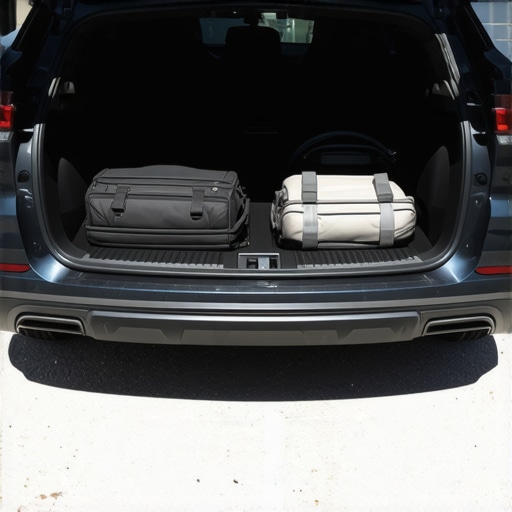
It hit me one morning, in the middle of packing for a weekend getaway—despite all my experience with luxury sedans, I still underestimated how much I could actually fit. My trunk was bursting, bags spilling over the edges, and I realized I’d fallen prey to a common myth: that a premium sedan has more space than it really does. That lightbulb moment made me question everything I thought I knew about luggage capacity in these sleek vehicles.
The Real Space Inside Your Sedan: It’s Not What You Think
Many people, myself included initially, assume that a high-end sedan—with all its plush features and stylish design—would naturally accommodate more luggage than compact cars. But the truth is, the interior space is often overestimated. I’ve learned through personal trial and error that understanding what actually fits involves more than just trusting the specs on a brochure.
Have you ever arrived at your hotel, only to realize your suitcase is a tight squeeze or that your carry-on refuses to close? That’s because the familiar images of spacious trunks are often misleading. The available luggage space is typically less generous than it looks, especially when you factor in passenger comfort and safety regulations.
Depending on the make and model, a premium sedan’s trunk can usually hold about 13 to 16 cubic feet of cargo—roughly equivalent to a large suitcase plus a small carry-on. But once you add a few bags, a gym bag, and maybe some shopping, space gets tight fast. And bulky items like golf clubs or strollers take up significant room, reducing your capacity even further.
Early in my days of traveling, I made the mistake of packing based on assumptions, only to find my bags didn’t quite fit or I had to produce a complicated reshuffle. That misstep taught me the importance of measuring and planning ahead. If you’re curious about how to optimize your limited trunk space and avoid last-minute surprises, I’ll guide you through some practical strategies in this post.
Moreover, understanding the true capacity is essential for more than just packing; it influences how you plan your trips, what you carry, and even the safety of your load. Overloading a car can compromise handling and safety, so it’s worth knowing the limits.
Curious if your luggage will fit next time? You’re not alone. Many travelers find themselves in the same boat, wondering whether their gear can squeeze inside. To help clear things up, I’ll explain how to accurately assess your vehicle’s cargo space and share tips from my personal experience.
Remember, the key isn’t just knowing what fits but understanding how to pack smartly and make the most of every inch. If you’ve ever struggled with fitting everything in, keep reading. We’ll explore practical solutions that ensure you stay on time and pack efficiently, so your journey starts smoothly and safely. Find out more about how proper reservation and safety measures can help you stay punctual and secure during your travels in this comprehensive guide on ensuring safety and punctuality.
Plan Ahead with Precise Timing
Start by aligning your schedule with the reservation window. Think of it like setting an alarm clock—if you’re off by even 10 minutes, you risk missing your ride or causing delays. I once scheduled a pickup for a flight and added a 15-minute buffer, which proved crucial when unexpected traffic slowed my driver. Always double-check your flight status and factor in the typical traffic conditions around your departure point. Use tools like real-time traffic updates to refine your pickup time, ensuring you arrive punctually without unnecessary waiting.
Use Reliable Reservation Systems
Choose platforms known for their secure booking processes and punctuality guarantee. When I switched to a service with comprehensive safety and reliability features, my late-night reservations became stress-free. These systems often include secure SSL-encrypted booking forms ( ), so your data stays protected. Verify that the service adheres to strict privacy policies, like those outlined in Privacy Policy, and offers transparent insurance policies, so you’re covered in case of incidents.
Confirm and Communicate Clearly
Once your reservation is made, confirm details via phone or app message. Think of it as a rehearsal for your trip—ensuring everyone knows the plan reduces the risk of confusion. I personally call my driver an hour before the pickup to re-confirm the location and arrival time, especially for busy airports with tight schedules. This proactive step acts as a safety net, reducing variability, and aligning expectations. Share your specific instructions if necessary, such as gate numbers or special access needs, through the reservation platform’s notes feature.
Stay Informed and Ready
Monitor your booking status app actively. Many systems provide live updates on driver location and estimated arrival. During one trip, I noticed my driver was delayed, so I used the platform’s modify feature (how to modify pickup location) to move the pickup point closer, preventing a missed connection. Having this control ensures flexibility without compromising safety or punctuality. Keep your phone charged and notifications enabled; quick responses can be the difference between a smooth trip and frustration.
Inspect Your Driver Before Departure
Before entering, verify your driver’s identity and credentials. This is akin to inspecting a passport at border control, integral to safety and security. Look for license plates matching reservation details and driver ID badges, which are crucial indicators of legitimate service. For extra assurance, minimal steps like checking the vehicle’s condition and confirming the driver’s professional badge can prevent mishaps. Remember, safety checks are essential, especially if you’re traveling late at night or in unfamiliar areas.
Implement Last-Minute Adjustments Safely
Sometimes, plans change unexpectedly. Use the platform’s features (how to change reservations) to update your pickup or drop-off points seamlessly. I once had to shift my destination due to a last-minute meeting, and executing this through the app avoided misunderstandings or delays. Always communicate with your driver, especially if the changes are significant, to maintain safety and schedule adherence. Keep in mind that modifying reservations is a standard feature designed to adapt to real-time needs while upholding security protocols.
Many travelers assume that booking a private ride guarantees absolute safety and punctuality, especially with high-end services that boast of professionalism and precision. However, without understanding the nuanced pitfalls, even the most sophisticated reservation systems can lead you astray. One common misconception is that relying solely on digital confirmations and standard GPS data ensures a flawless experience. In reality, advanced factors like driver route knowledge and real-time traffic updates significantly influence on-time arrivals. Studies, such as those from the Transport Research Board, show that professional drivers who customize routes based on live intelligence reduce delays, highlighting that trust in automated systems alone isn’t enough.
A critical mistake many make is neglecting to verify driver credentials or assuming that high ratings equate to safety. While reviews provide a surface-level assurance, they often miss underlying risks like driver fatigue or unfamiliarity with specific routes. For example, seasoned professionals recommend checking for specific visual cues, such as licensing badges and vehicle condition, to verify legitimacy—details that often escape casual oversight.
When it comes to reservations, the myth that pre-paying or booking last-minute guarantees a secure, punctual experience can be misleading. Advanced travelers understand that synchronizing reservation timing with traffic patterns and driver availability, through tools like hourly reservation tips, is vital. This approach minimizes unexpected delays caused by surge pricing, last-minute cancellations, or driver shortages. Moreover, many assume that once a reservation is confirmed, no further action is needed, but proactively confirming details and expected arrival times remains crucial for security and schedule adherence.
An often-overlooked nuance is the risk of overloading vehicles or misjudging passenger safety, especially with high-end vehicles that prioritize comfort over space. The misconception that luxury cars can swallow large luggage loads without impact can lead to unsafe driving or damage, compromising safety. Therefore, understanding the vehicle’s actual capacity and packing smartly align with the cause, reinforcing that safety is intertwined with preparation.
For advanced users, questions like “How can I ensure my driver’s familiarity with local routes during peak hours?” come into play. Expertise in route planning and real-time communication, supported by trusted reservation platforms, can be game-changers. For more insights into securing your reservations and ensuring punctuality, visit this comprehensive guide.
Remember, the real safety and punctuality hinge on understanding the subtleties that go beyond surface-level trust. Are you aware of these hidden nuances? Have you ever fallen into this trap? Let me know in the comments.Maintaining punctuality and safety over time requires not only discipline but also the right tools and practices. Personal experience has shown that employing specific software and systematic routines can significantly improve consistency. One of my core tools is a dedicated scheduling app that syncs with my calendar, ensuring I never miss a reservation or arrive late. I personally use a platform that offers hourly booking capabilities, which allows me to manage multiple commitments without the stress of last-minute planning. These platforms often provide real-time updates and automatic reminders, reducing the risk of human error and keeping me on time.
Another essential element is verifying driver credentials before each trip. I regularly use digital credential checks integrated within trusted reservation systems, which help me confirm that the driver’s licensing and insurance are valid. This proactive step is vital for long-term safety, especially as regulations evolve. Additionally, I rely on pioneering route knowledge—many professional drivers avoid standard GPS routes, opting instead for pre-planned alternatives based on real-time traffic data. This approach can be supported by certain apps or local knowledge sharing tools, but the key is to familiarize yourself with these tactics and integrate them into your routine.
Maintaining these practices over time raises the question:
How do I sustain these safety and reservation standards day after day?
Consistency comes down to systematic habits. For instance, I set aside 10 minutes before each trip to review the driver’s documentation, confirm the reservation details, and check the latest traffic updates. This habit, though small, safeguards against complacency and ensures safety is prioritized every time.
Looking ahead, I believe that future trends will lean even more toward automation and AI-driven scheduling, but human oversight will remain crucial. As noted in industry insights, reliance solely on automated routing can blind you to nuances that only experienced professionals recognize (see this article). Implementing multiple layers of verification and routine checks will be vital for sustained reliability.
One advanced tip I recommend trying today is ensuring that your reservation system offers real-time driver identity verification. This extra layer can drastically reduce risks over long-term usage. Tech solutions like biometric driver authentication or digital ID verification are setting new safety standards—make it a point to explore such options.
By adopting these specific tools and habits, you can transform your reservation experience from reactive to proactive. Remember, consistency in safety and punctuality is a practice built over time. Start by integrating a trusted scheduling app and commit to regular credential checks—these small steps will lead to big improvements in your reliability.In my journey through the world of high-end transportation, I’ve uncovered some *lessons that changed everything* about how I approach safety and punctuality with hourly reservations. One glaring truth I faced was that overconfidence in tech or assumptions about driver competence can lead to unexpected delays or safety risks. For example, relying solely on automated GPS routes without the driver’s local knowledge sometimes caused me to miss critical timing windows. The biggest insight? Always prioritize *human expertise and proactive verification* over blind trust in technology alone. I learned that building a habit of personally checking driver credentials and maintaining open communication reduces surprises and enhances safety. Another lightbulb moment was realizing that *flexibility in your reservation*—like knowing how to modify pickup or drop-off points smoothly—can prevent last-minute chaos. These experiences taught me that true mastery comes from a disciplined routine combining modern tools with personal diligence, ensuring your luxury ride is not just stylish but also safe and punctual.