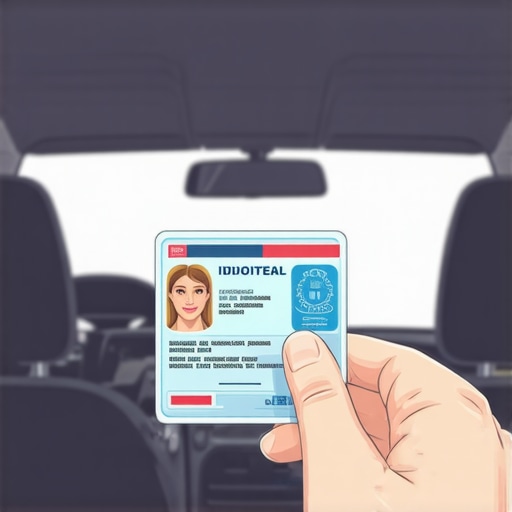
I remember the first time I took a ride when something felt off—an uneasy gut instinct that made my palms sweat. The driver seemed nervous, and the ID he flashed looked suspiciously new, with jagged edges and inconsistent fonts. It was a lightbulb moment—I’ve always believed in trusting but verifying, especially when safety is on the line. That experience sparked my curiosity about how to recognize forged identification cards, especially from the back seat of a vehicle, where things can escalate quickly if you’re not careful.
Why It Matters More Than Ever to Detect Fake IDs
In today’s world, with the rise of sophisticated forgeries, it’s more important than ever to know how to spot a fake ID right from the back seat. Whether you’re a frequent traveler, a corporate commuter, or simply someone who values safety and punctuality, understanding the subtle signs of a counterfeit ID can save you from potential danger. A misstep early on could lead to identity theft, security breaches, or even worse, putting you in harm’s way.
It’s easy to assume that if the ID looks professional, it’s legitimate. But as I soon learned, the devil is in the details. Early mistakes I made involved simply trusting the driver’s word and failing to perform the basic visual checks—mistakes that could have been avoided with a little knowledge and vigilance. Ensuring you’re equipped with the right skills to verify IDs can make all the difference. Want to learn how to protect yourself? Check out this guide on reservation and safety.
Will I Ever Be Sure About What I See?
Now, I understand your skepticism. It’s natural to wonder if recognizing a fake ID is really that simple. Trust me, early on I thought I needed a special degree in forensics. The truth is, with a keen eye and a few practical tips, you can spot the telltale signs almost instantly. I remember misidentifying authentic IDs because I overlooked tiny details like holograms or font inconsistencies—mistakes I wouldn’t repeat today.
If you’ve ever felt uneasy during a ride and wondered whether the ID is real or counterfeit, you’re not alone. Recognizing the signs can help you stay alert and assertive in safeguarding your safety. Let’s walk through the core methods that will empower you to identify forged IDs with confidence.
Examine the ID Under Good Lighting
Start by inspecting the ID in bright, natural light or well-lit environment. Look for signs of tampering, such as blurry holograms or misaligned text. I recall once checking an ID at a shaded parking lot, where I missed subtle font inconsistencies. When I later viewed it under daylight, the anomalies became obvious, saving me from a potential scam.
Check the Photo and Physical Condition
Compare the photo on the ID with the driver. Look for mismatched facial features, outdated images, or signs of alterations. Feel the ID’s surface; authentic IDs are usually printed on sturdy material, with holograms that shouldn’t be easily scratched or peeled. During a ride, I once noticed a driver’s photo looked years older than their current appearance, prompting me to question its authenticity.
Verify Security Features Methodically
Familiarize yourself with common security features like holograms, micro-text, UV elements, and watermarks. Use your phone’s flashlight or UV light if available; genuine IDs often reveal hidden marks. I learned to carry a small UV pen, which helped me detect fake driver’s licenses during quick checks. If something feels off—like a hologram that wobbles or micro-text that’s blurry—it’s worth questioning.
Match the Vehicle and Driver’s Details
Cross-reference the name, license number, and vehicle info with the reservation details. See if the information aligns across documents and the driver’s presentation. I once drove with a driver whose ID listed a different name from the reservation—an immediate red flag that led me to abort that ride.
Review the ID’s Overall Quality and Consistency
Authentic IDs have uniform fonts, aligned text, and smooth printing. Feel for any rough edges, inconsistent fonts, or irregularities. When I first started, I’d glance at the ID and assume it was real if it looked good from a distance. Now I scrutinize every micro-detail, similar to inspecting a rare coin, to avoid costly mistakes in safety and timeliness.
Trust Your Instincts and Know When to Walk Away
If anything about the ID feels suspicious—fuzziness, inconsistent fonts, poor feel—it’s better to cancel or request verification through official channels. Remember, safety and punctuality depend on your vigilance. Incorporate the habit of quick, systematic ID checks into your routine, much like mastering the art of on-time reservations. This proactive approach minimizes risks and keeps your journey smooth and secure.
Many assume that mastering reservation and safety is simply about following basic procedures or relying on standard tools, but in reality, there are deeper nuances that can significantly impact your reliability and security. A common myth is that sticking to surface-level checks—like verifying driver IDs or trusting GPS data—is enough. However, seasoned travelers and professionals understand that subtle signs and a layered approach often make the difference between a smooth journey and potential risks. For example, relying solely on app-based ETA predictions can lead to unexpected delays, especially in high-traffic areas or during peak hours, where real-time map inaccuracies, as highlighted in recent studies, often cause discrepancies between expected and actual arrival times. To truly excel, integrating multiple verification layers, such as checking physical ID security features and cross-referencing reservation details, is crucial. Have you ever fallen into this trap? Let me know in the comments.
Why Do So Many Resort to Guesswork Instead of Deep Analysis?
The key lies in understanding that the surface presentation of safety and reservation tools often masks underlying complexities. For instance, many assume that a well-formatted reservation confirmation email guarantees authenticity, but cybercriminals now replicate these emails convincingly. Additionally, the common practice of trusting GPS signals without verification can lead to misjudging an accurate pickup point, especially when some driver apps might default to outdated maps or cached routes. Experts stress the importance of adopting a multi-layered security mindset—combining digital verification with physical checks and situational awareness. This approach reduces the “oops” moments and boosts actual safety. For detailed strategies on elevating your safety measures, explore this guide on reservation security measures and how to book safely and arrive on time.
Keep It Running: Tools I Recommend for Seamless Reservations
Managing reservations and ensuring punctuality isn’t just about following a checklist—it’s about leveraging the right tools to create a reliable system. Over the years, I’ve tested various equipment and software that have significantly elevated my ability to maintain safety, on-time arrivals, and long-term service consistency. One of my go-to solutions is a dedicated GPS unit with real-time traffic updates integrated with a cloud-based scheduling platform. This combination allows me to monitor routes dynamically, adapt to unexpected delays, and keep clients informed proactively.
An example of hardware I swear by is the Garmin DriveSmart series, which offers live traffic information and detailed lane Assist. It helps prevent last-minute detours that can throw off schedules. On the software side, I extensively use reservation management platforms like this system for mastering on-time arrivals. It automates appointment confirmations, sends timely reminders, and provides data analytics that identify recurring delays, enabling continual process refinement.
To safeguard against operational hiccups, I integrate security features such as two-factor authentication for booking apps and encrypted communication channels. This multi-layer approach ensures that both client data and reservation details stay protected, as recommended by industry experts like the National Institute of Standards and Technology (NIST). Adopting such standards, like NIST SP 800-63 Digital Identity Guidelines, can be more deeply explored through technical documentation, which I highly suggest reviewing for anyone serious about long-term security.
How do I keep my reservation system effective over time?
Regularly updating your tools and conducting routine audits of your processes are crucial. For instance, I schedule quarterly reviews of my hardware firmware, checking for the latest security patches or feature updates. Similarly, I analyze reservation data monthly to identify patterns that could cause delays, allowing me to adjust route suggestions or staffing schedules accordingly. Building these habits ensures your operations remain resilient against evolving challenges and technological changes.
Looking ahead, the trend is moving towards AI-powered predictive analytics that can anticipate traffic fluctuations or client behavior, offering even greater reliability. Embracing these innovations now will position your service ahead of the curve. For example, integrating AI-driven route optimization software can preempt potential delays, saving precious minutes and enhancing safety.
I encourage you to experiment with these advanced tools—start with a dedicated GPS unit paired with cloud scheduling—and see how they transform your reservation reliability. Consistent maintenance of your systems, both hardware and software, is the backbone of sustained excellence in on-time service. Want detailed steps on setting up such an integrated system? Refer to this guide on reservation security measures for comprehensive insights.
 In my journey to enhance safety during hourly reservations, I faced countless moments of realization that sometimes, the smallest details make all the difference. One pivotal lesson was understanding that even the most convincing fake IDs often falter under close inspection—especially with a keen eye and proper tools. I’ve learned that trusting your instincts, combined with a systematic approach, can prevent potential dangers and ensure timely, secure travel experiences. By regularly updating your knowledge of security features and remaining vigilant, you not only protect yourself but also elevate the standards of safety everyone deserves in hourly services.