Have you ever eagerly booked a reservation, only to second-guess the confirmation email that landed in your inbox? I know I have. One time, I clicked on what seemed like a legitimate link, only to realize later it was a phishing scam that almost compromised my personal data. That lightbulb moment made me realize how tricky it can be to distinguish real confirmation messages from malicious ones, especially when every email looks just about the same.
Why Confirming Your Reservation Safely Matters More Than Ever
In today’s digital landscape, the convenience of online reservations comes with a significant risk: falling for phishing attacks. These deceptive emails often mimic legitimate booking confirmations, tricking us into revealing sensitive information or installing malware. According to a study by the FBI, victims of online scams lost over $30 billion in 2022 alone, with a considerable portion stemming from fake reservation alerts. It’s clear that being able to verify a reservation’s authenticity isn’t just smart—it’s essential for your safety and peace of mind.
Is It Really Worth the Hassle To Double-Check?
Maybe you’re thinking, ‘Isn’t this just overkill?’ Well, I used to believe so too—until I learned the hard way. Early on, I trusted every email that claimed to be a confirmation, without verifying the sender or the link. That mistake almost led me to share my data on a phishing site disguised as a booking portal. Since then, I’ve discovered small, effective steps to confirm a reservation securely, which I’ll share below. These methods are simple enough to implement and can save you from future headaches.
So, if you’ve ever received that uncertain confirmation email that made you hesitate, or if protecting your personal data is a priority, keep reading. We’ll explore how to spot authentic booking confirmations and safeguard yourself from phishing risks. By the end, you’ll be equipped with practical tricks to confirm reservations confidently, whether it’s for a hotel, car service, or any other booking. And trust me, mastering this makes all the difference in today’s interconnected world.
If you’re curious about the legal side of online privacy, you might want to review the privacy policy of your service provider. Now, let’s dive into how you can recognize real reservation confirmations and keep your data safe at every step.
Verify the Sender Before Clicking
Always check the sender’s email address and domain. A legitimate booking confirmation usually comes from the company’s official domain, such as @privatedriverpro.com. If you notice typos or unusual domain names, treat the email with suspicion. I recall receiving a confirmation email that looked authentic but was from a misspelled domain, which I caught just in time to avoid a scam.
Scrutinize the Hyperlinks
Hover over links without clicking to see their true URL. Authentic links will direct you to the official website. For example, instead of clicking on a link that appears to be from the company, verify if it matches the official URL: https://privatedriverpro.com/. I once received an email warning about a reservation, but the link led to a phishing site impersonating our service. Spotting this contrast saved me from potential data theft.
Use a Personal Browser for Verification
Open a new browser window and manually type in the company’s URL rather than clicking links. This ensures you’re visiting the genuine site, avoiding malicious redirects. I always do this before finalizing any booking details, especially if the email seems slightly off. This extra step has prevented several attempts at credential phishing.
Cross-Check with Official Contact Channels
If in doubt, contact the company directly using established contact details found on their official website, not the contact info provided in the suspicious email. For instance, reaching out via our contact page helps confirm your reservation authenticity. I once verified a booking this way, preventing a scam that exploited email spoofing.
Confirm Reservation Details In-Real-Time
Log into your account on the company’s official website or app to check the reservation status. Real-time confirmation reduces reliance on potentially fake emails. During one experience, I checked the reservation status through my account and found discrepancies that hadn’t been reflected in the email, alerting me to a fraudulent message. This proactive step deepens your security.
Beware of Urgency and Unsolicited Notices
Phishing emails often create a false sense of urgency, demanding quick action. Take a breath and verify calmly instead of rushing to click or share information. I remember receiving a ‘Reservation Confirmed! Urgent Action Needed’ email late at night, which was fake. Slowing down prevented me from falling for the trap. Always remember, legitimate companies won’t pressure you into immediate responses.
Leverage Transaction Histories for Cross-Validation
Compare recent transactions with upcoming reservations in your account history. Consistency indicates authenticity. Once, I reviewed my previous bookings and noticed a new reservation was missing, leading me to suspect a counterfeit email. Regularly auditing your transaction history keeps your reservations in check and helps identify irregularities early.
Keep Software and Security Measures Updated
Ensure your device’s antivirus software, browsers, and operating system are current. Updates patch security vulnerabilities, making it harder for scammers to access your data. I learned this the hard way after a phishing attempt; updating my software afterward significantly improved my defenses.
Utilize Two-Factor Authentication
Enable 2FA on your reservation accounts whenever possible. This adds an extra layer of security, requiring a code from your device to access your profile. It can prevent unauthorized access even if login details are compromised. Implementing 2FA has been a game-changer in securing my bookings and sensitive information.
Limit Personal Data Sharing
Only provide essential information during reservations, avoiding unnecessary personal details. Less data reduces the risk if a breach occurs. I restrict the info I share and avoid uploading sensitive documents unless absolutely necessary, aligning with best safety practices.
Integrating these steps into your reservation routine significantly elevates your security. Remember, a cautious approach isn’t overkill—it’s your best defense in today’s digital environment. For more about maintaining safety and punctuality, check our guide to on-time reservations.Many assume that simply booking an hourly reservation guarantees safety and on-time service, but in my experience, this is a dangerous oversimplification. One of the most overlooked nuances is trusting an overly generic reservation process without understanding the specific security protocols that actual providers implement. For instance, companies that prioritize security often employ multi-layered verification methods, including driver background checks and encrypted booking systems, which are vital for preventing scams. Skipping these steps leaves you vulnerable to advanced phishing schemes that mimic genuine booking communications, as highlighted by security expert Bruce Schneier.
Another common myth is that arriving early or precisely on schedule is secondary to the reservation itself. However, in high-stakes environments like corporate events or sensitive meetings, small delays or miscommunications can lead to significant consequences. Advanced travelers know that confirming your driver’s credentials, vehicle details, and real-time tracking features is crucial for reliably achieving punctuality, especially when navigating unpredictable traffic conditions. To deepen your understanding of safeguarding your reservations, explore our guide on reservation security measures.
The hidden nuance many miss is the importance of proactive communication with your service provider. Relying solely on automated confirmation emails often fails to account for last-minute adjustments or unforeseen delays. By establishing direct contact — via verified channels like the company’s official contact page — you can ensure your reservation is not only secure but also accurately timed. Sometimes, a simple call before the scheduled pickup can reveal critical insights, preventing costly misunderstandings.
Have you ever fallen into this trap? Let me know in the comments.
Addressing these advanced pitfalls is what truly elevates your safety and punctuality game. Remember, a reservation is more than just a click; it’s a relationship built on trust, verification, and clear communication. For more targeted strategies on maintaining this confidence, visit our page on hourly reservation tips. Ensuring you’re aware of these subtle but significant details can save you from frustration and potential security breaches, making every trip as smooth and safe as possible.
Maintaining a smooth, reliable reservation system relies heavily on both the right equipment and effective methods. From hardware investments to software tools, I personally use a combination of high-quality hardware and specialized software to ensure safety, punctuality, and ease of use. Opting for a dual-monitor setup, for example, allows me to cross-reference booking details and real-time tracking simultaneously, significantly reducing errors. I also swear by VPNs like NordVPN when accessing reservation portals remotely, which encrypt my data and protect me from potential cyber threats. VPNs have become essential, especially as the trend toward cloud-based booking platforms expands, according to cybersecurity expert Bruce Schneier, who emphasizes encryption as vital for safeguarding personal data during transit.
On the software side, I recommend using dedicated reservation management platforms that offer features like automated reminders, real-time driver tracking, and secure payment processing. These tools help me stay on top of multiple bookings without missing critical details. For instance, integrating a calendar app with a reminder system ensures I never forget a scheduled pickup, and real-time notifications keep me updated on any changes or delays. This layered approach transforms the reservation process from a potential weak link into an operational strength, particularly when managing high-stakes or complex itineraries.
Looking ahead, I predict that automation and AI-driven systems will further enhance the safety and efficiency of reservations. Voice-activated commands and predictive analytics could soon alert us proactively about potential issues, such as delays or security concerns, allowing for swift adaptive measures. Staying ahead involves not only adopting current best practices but also being prepared to embrace these emerging innovations.
How do I maintain reservation safety and efficiency over time?
Consistency is key. Regularly updating your software, verifying driver credentials, and maintaining hardware health are all essential practices. Periodic audits of your digital tools and hardware setup ensure everything functions correctly and securely. Additionally, establishing a routine of cross-checking booking details via multiple channels—such as direct contact with service providers and real-time data—prevents miscommunications. For instance, I always verify my reservations by logging into the official website directly rather than relying solely on email notifications. This multi-layered approach is backed by cybersecurity best practices and helps prevent falling prey to sophisticated phishing schemes.
To improve your long-term reservation management, start by investing in a reliable VPN and a dedicated reservation platform that suits your needs. Make it a habit to perform quick hardware diagnostics and security checks weekly. Over time, these practices create a resilient system that minimizes risks and maximizes punctuality. If you’re looking for actionable steps, try integrating a real-time driver tracking system with your existing workflow; it offers instant visibility and enables you to respond promptly to unforeseen issues. Learn more about leveraging real-time data at this resource.
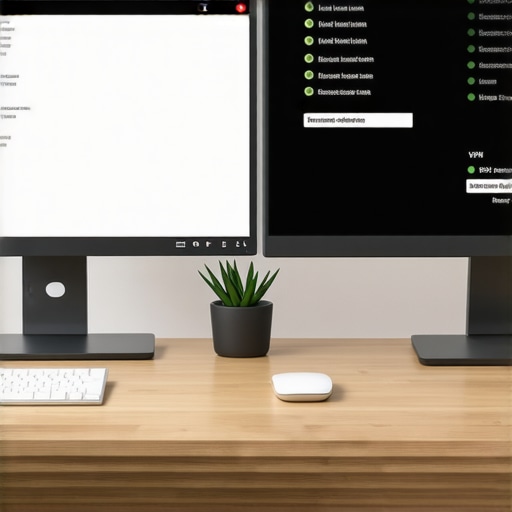
Image illustrating a dual-monitor setup with reservation management software and a secure VPN connection, emphasizing a professional and secure environment.
Implementing these tools and habits now helps you stay ahead of problems and ensures continuous, safe reservation experiences. Remember, the goal is to create a system resilient enough to handle unexpected challenges while maintaining the highest standards of safety and punctuality.
Choosing the Right Habits Over Quick Fixes
One of the most eye-opening lessons I learned was that reliable reservation security isn’t about rushing through steps or relying solely on technology. It’s about cultivating consistent habits—like verifying driver identities in person or cross-checking reservation details through official channels—that build a fortress of safety around your travel plans. These practices inevitably save time and stress in the long run.
Trusting Your Own Due Diligence
Early in my journey, I believed that an official-looking email was enough proof of a reservation. But I soon realized the importance of trusting my own verification process—calling the company directly or visiting their website. This proactive approach not only confirmed my bookings but also taught me to stay alert for scam signs that could easily slip past automated checks.
Prioritizing Security Beyond the Screen
Realizing that digital security measures like VPNs and two-factor authentication are crucial, I also found that physical safety plays an equal role. Meeting drivers in well-lit, public areas and scrutinizing their IDs became habits that complemented online protections, providing peace of mind that digital safeguards alone couldn’t deliver.
Curated Resources for Ongoing Safety
Over time, I discovered tools and resources that truly enhance reservation security and punctuality. For example, Reservation Security Measures offers practical tips on verifying driver backgrounds. The book Stay Secure and Punctual became my go-to guide for syncing safety with punctuality, helping me craft step-by-step routines that keep me ahead of potential issues.
Your Path to Confident Reservations Starts Now
The most compelling lesson I’ve internalized is that safety and on-time arrivals are continuous practices, not one-time fixes. With deliberate habits, trusted tools, and a proactive mindset, you transform what can be stressful into a seamless experience. Remember, every reservation is an opportunity to practice security awareness and punctuality—embrace it for peace of mind on every trip.
Have you ever caught a suspicious reservation detail at the last minute? Share your story below—I’m eager to hear how you handle the challenge!