
I still get a pit in my stomach when I think about that rainy Tuesday morning three years ago. My client’s plane had just landed, and I had hired a local transport service to handle their hourly reservation. On paper, everything looked perfect. The driver was on time, the car looked sleek, and the safety ratings seemed fine. Then, a minor fender-bender on the slick highway turned my world upside down. When the police officer asked for proof of commercial insurance, the driver handed over a standard, personal auto policy. My heart dropped. The personal insurer immediately denied the claim because it was a commercial ride. That single oversight cost my business thousands of dollars and shattered my client’s trust. I learned the hard way that you cannot just assume a professional exterior means real legal protection. Today, I want to share the exact, stress-free method I developed to audit your driver’s commercial insurance so you never have to experience that panic. We will strip away the confusing jargon and give you the practical steps to guarantee your peace of mind before you ever step foot in a vehicle.
Why Real Commercial Insurance is Your Only True Safety Net
It is easy to get lulled into a false sense of security by shiny booking apps and professional-looking uniforms. However, there is a massive legal gulf between a personal auto policy and true commercial coverage. According to a landmark study by the Insurance Information Institute, personal auto policies specifically exclude coverage for “livery” or driving passengers for hire, leaving passengers completely exposed in an accident. If your driver is operating under an inadequate policy, you are essentially riding uninsured. This is why verifying proper credentials is just as critical as ensuring why safety and timeliness matter in hourly reservation services. Understanding the difference between these policies is the ultimate shield for your physical and financial safety. If you want to keep your travel stress-free, mastering this simple check is the first step toward securing safe and reliable hourly bookings.
Is auditing insurance documents actually worth the extra hassle?
I hear this skepticism all the time from busy travelers. Who has the time to look over policy documents before a quick trip? But here is the reality: a true professional chauffeur expects this question and will happily provide proof. If you know what to look for, the entire process takes less than sixty seconds. It is much easier to perform a quick visual check than to deal with the aftermath of a rejected accident claim. To make things even simpler, you can combine this quick audit with other basic checks, such as knowing how to verify commercial vehicle tags before you get in. Have you ever actually asked your driver or transportation company to show you their commercial certificate of insurance? I would love to hear how they responded—did they share it instantly, or did they give you the runaround?
Step-by-Step Insurance Audit for Worry-Free Travel
To avoid the exact trap I fell into, you must learn to look for the right paperwork before you settle in for your trip. This is not about being paranoid; it is about verifying that your hourly reservation is genuinely backed by professional coverage. The process is incredibly simple once you know what to look for, and it begins with a document called the Certificate of Liability Insurance.
Ask for the Certificate of Insurance in Advance
The most professional way to handle this is to request proof before the vehicle even arrives. When you are booking, simply ask the dispatcher or agent to email you a copy of their Accord Certificate of Insurance (COI). This is a standard one-page document in the commercial transport industry. When I was organizing a high-profile corporate roadshow last year, I sent a quick email requesting this document. The company had it in my inbox within four minutes. If a service provider hesitates, makes excuses, or claims that their insurance is ‘private,’ consider it an immediate red flag. A legitimate provider prioritizing safety precision in hourly reservations will always share this document gladly.
Match the Vehicle Identification Number
Once you have the certificate in hand or on your phone, you need to verify that the vehicle picking you up is actually listed on the policy. Look at the ‘Description of Operations’ section at the bottom of the COI or look for an attached scheduled vehicle list. Match the VIN or the make and model of the vehicle that arrives at your curb with the scheduled vehicles on the policy. I once had a replacement luxury SUV arrive for a client, and when I did a quick check, I discovered the company was using an external subcontractor whose specific vehicle was not listed on their master policy. We refused the ride and rescheduled, saving us from a massive liability gap. This attention to detail is what separates a true professional from a casual ride-hailing service, and it is a key reason why you should never use a personal app for corporate safety.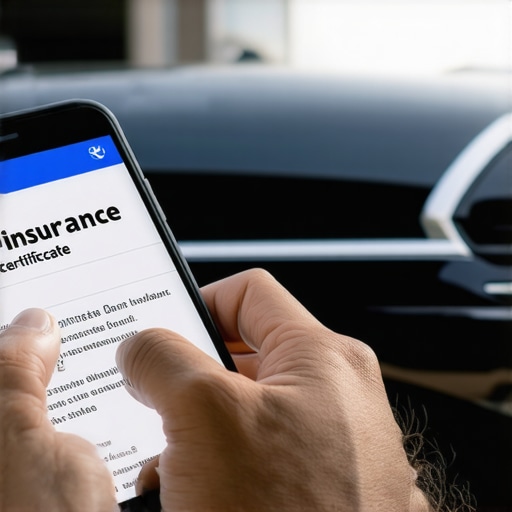
Check the Policy Limits and Expiration Date
A real commercial policy should show at least $1,000,000 to $5,000,000 in general liability and automobile liability limits. Check the top-right section of the document to ensure the policy expiration date has not passed. It sounds obvious, but you would be shocked at how many smaller operations let their premium payments slip, leaving them with cancelled policies while they continue to accept bookings. Ensuring the policy is active and robust is the baseline for ensuring safety first on your next reservation. Taking sixty seconds to look at these three key areas—the document validity, the vehicle match, and the coverage limits—gives you total control over your safety before the wheels start turning.
Why the Safest-Looking Vehicles Are Often the Most Vulnerable
Most corporate travel planners and frequent flyers believe that booking a high-end luxury vehicle automatically guarantees premium safety. We have been conditioned to trust clean leather, late-model sedans, and quiet rides. But in my years of auditing transport logistics, I have discovered a terrifying truth: the vehicle’s physical condition has almost zero correlation with its legal and financial safety net. A pristine luxury vehicle can still leave you completely exposed if the operator is cutting corners behind the scenes. This is why looking at the surface is a dangerous trap, and why you must look deeper to ensure you are securing safe and reliable hourly bookings.
The biggest industry myth is that commercial insurance policies are static. In reality, commercial fleet coverage is highly fluid. Many boutique services add and remove vehicles from their policy schedules weekly to keep premiums low. A company might show you a valid master certificate from last month, but the specific vehicle picking you up today could have been temporarily removed from the active schedule. If an accident occurs while you are riding in an excluded vehicle, you are legally riding uninsured, regardless of how much you paid for your reservation.
Why do standard insurance background checks fail to protect executive travelers?
Standard background checks and basic operator permits only verify that a company was compliant at one specific moment in time—usually during their annual licensing renewal. They do not account for real-time policy lapses, premium defaults, or mid-year vehicle substitutions. According to a transportation safety analysis by the Federal Motor Carrier Safety Administration (FMCSA), active compliance monitoring reveals that carrier insurance statuses fluctuate constantly due to administrative delays and payment issues. Relying on a permit sticker on the windshield is simply not enough when your physical and financial safety is on the line. You need to know how to verify commercial vehicle tags and active policy schedules in real time to ensure actual protection.
The Subcontracting Trap That Nullifies Your Protection
Another common industry practice is silent subcontracting. When an hourly reservation service gets overbooked, they often farm out their rides to smaller, independent owner-operators. While the brand name on your booking confirmation remains the same, the actual car and driver showing up belong to a completely different legal entity. If the parent company did not secure an additional insured endorsement from that subcontractor, a massive insurance gap is created. If an incident happens, both insurance companies will often spend years pointing fingers at each other while you are left holding the bag. This organizational shell game is a primary reason why you should never use a personal app for corporate safety.
To protect yourself, always verify that the company’s master policy includes a ‘Hired and Non-Owned Auto’ coverage extension. This specific clause ensures that even if your driver is a subcontractor using a personal or leased vehicle, the primary commercial policy still stretches to cover your ride. It is a critical layer of safety precision that separates amateur operations from elite transport services. Have you ever fallen into this subcontracting trap during your travels? Let me know in the comments below.
Over the years, I have realized that keeping your travel plans secure is not a one-time chore; it is about establishing a simple, repeatable routine. If you want to maintain absolute control over your travel safety, you need the right tools and a streamlined system. Today, I do not rely on guesswork or back-and-forth emails when managing an hourly reservation. Instead, I use a combination of simple digital tools and strict verification habits to ensure my rides are safe, insured, and consistently on time.
My Go-To Digital Tools for Real-Time Verification
To make this process completely seamless, I keep a dedicated folder on my smartphone containing three essential tools. First, I use the public lookup portal provided by the Federal Motor Carrier Safety Administration (FMCSA). By entering a company’s USDOT number, I can instantly verify their active operating authority and insurance status in under thirty seconds. This completely eliminates the risk of riding with a carrier whose insurance has lapsed.
Second, I rely on secure, direct communication tools. Before booking, I use the methods outlined in how to confirm your secure booking link is using https to verify that any document exchange is encrypted. This prevents sensitive information, like my travel itineraries or corporate credentials, from being intercepted. Finally, I use real-time flight tracking apps integrated with my calendar so that my pick-up times automatically adjust without manual intervention, which is the ultimate secret to ensuring safety first on your next reservation.
How do I maintain this verification habit without slowing down my schedule?
The secret to long-term success is automating the paperwork before your trip even begins. I recommend setting up a standard email template that you send to a transport provider the moment you request an hourly reservation. The template should ask for their active certificate of insurance and vehicle schedule upfront. When you make this request part of your booking checklist, it takes zero extra time on the day of your travel. This systematic approach is exactly why safety and precision are key to reliable hourly reservations.
Looking ahead, I predict we will soon see blockchain-verified digital insurance certificates integrated directly into booking platforms. This will allow travelers to instantly verify a vehicle’s active policy with a simple scan of a QR code on the windshield, completely removing the manual lookup step. Until that technology becomes mainstream, performing this quick manual audit remains your best defense. I challenge you to try this on your very next trip: ask your provider for their commercial COI before you board, and watch how a truly professional service handles your safety with pride.
What I Learned from a $12,000 Insurance Nightmare
If there is one thing my years in the corporate logistics trenches have taught me, it is that a beautiful vehicle is not a shield against legal liability. My costliest mistake was trusting a professional-looking website instead of demanding hard paperwork. What I realized too late is that legitimate operators do not just carry commercial policies; they wear them like a badge of honor. When you audit insurance, you are not being a difficult client. Instead, you are filtering out the amateurs who put your business and physical safety at risk. Real safety precision means knowing exactly who is behind the wheel and what backing they truly have before you ever close the door.
- The 60-Second Rule: A professional operator will have an Accord Certificate of Insurance in your inbox within minutes of your request. If they hesitate, cancel the booking.
- Subcontracting is the Silent Killer: Always ask if the specific vehicle arriving is owned by the primary company or a third-party contractor.
- Policy Expirations Matter: Always check the top-right corner of the certificate; a lapsed policy is just as useless as having no insurance at all.
The Smart Traveler’s Verification Kit
You do not need to be a legal expert to keep yourself safe. I recommend bookmarking and using these specific resources before booking your next ride:
- The FMCSA Company Lookup Portal: Enter any transport provider’s USDOT number here to instantly check their live operating authority and active insurance status.
- The Pre-Trip Verification Checklist: Read through our guide on the pre-trip verification that prevents scams to ensure your driver’s identity and vehicle match your booking details perfectly.
- The Safe Boarding Guide: Learn the visual inspection every rider should do before boarding to quickly spot physical vehicle red flags in under thirty seconds.
Take Control of Your Hourly Bookings Starting Today
Your safety is too valuable to be left to chance or assumed under a glossy app interface. By taking just a minute to request a certificate of insurance and verifying the vehicle details, you ensure that your next travel experience is backed by genuine, professional protection. Making this simple check a non-negotiable part of your routine is the single best way to guarantee safe and reliable hourly bookings. Have you ever asked a transport service for their official proof of insurance before a ride? Let me know how they handled your request in the comments below!