I was standing on a curb in London, clutching a cold espresso and watching my third ride-share cancellation of the morning flicker on my screen. I had forty-five minutes to get across the city for a high-stakes board meeting, and the algorithm simply did not care that my career was on the line. That was the moment I realized that winging it with standard apps is a recipe for disaster when you are jumping between cities. I have spent the last decade refining the protocol for booking multi-city executive travel, and honestly, I made every mistake in the book so you do not have to.
I Learned the Hard Way That Apps Cannot Handle Real Life
My biggest blunder early on was thinking I could save a few bucks by booking individual legs for a three-city roadshow. I thought I was being efficient. I was not. Between the car is five minutes away lies and the constant stress of luggage transfers, I arrived at my final presentation looking like I had just finished a marathon in a suit. Most people do not realize why point-to-point booking fails for executive roadshows until they are actually stranded. It is not just about the ride; it is about the continuity. When you have a dedicated professional, the car becomes your mobile office, not a stressful gamble. I eventually shifted my strategy to focus on hourly reservations because why hourly rates save more than money for business travelers is something you only truly feel when you are closing a deal in the back seat instead of staring at a map. According to research by the Global Business Travel Association (GBTA), traveler friction—the stress and lost time due to travel logistics—can significantly impact an executive’s performance and decision-making capabilities. We are not just talking about comfort; we are talking about ROI.
The Question Everyone Asks Before Their First Executive Roadshow
Is a private driver actually worth the extra cost? I get it. Your CFO might look at the line item and wince. But have you ever calculated the cost of a missed connection or a late arrival to a pitch? I did not, and it cost me a partnership back in 2018. The peace of mind that comes from knowing your driver is already there, following the buffer rule that actually prevents tardy starts, is priceless. Today, I am breaking down the exact protocol I use to ensure every multi-city trip runs like clockwork. We are going to dive into the technical side of security, the math of hourly vs. flat rates, and the the logic behind choosing a professional chauffeur over on-demand apps. Have you ever been left stranded by a ride-share app right before a big meeting? Tell me your horror story—I have probably been there too.Once you move past the basics, your travel success hinges on a strict verification protocol. I treat every pickup like a security clearance. The first thing I do when a car pulls up is a ‘Digital Handshake.’ I never lead with my name. Instead, I ask the driver who they are here for. This simple habit, along with knowing how to verify your drivers identity without being rude, creates an immediate professional dynamic. It signals that you are an experienced traveler, not a tourist.
The Digital Handshake and Verification Phase
In Paris last spring, I had a driver pull up in a pristine S-Class that matched my booking perfectly. But something felt off. By using 7 tactics to verify your drivers commercial license in seconds, I realized he was a sub-contractor who hadn’t been briefed on my multi-stop itinerary. Because I caught it at the curb, we spent two minutes recalibrating instead of forty minutes heading to the wrong arrondissement. This is why you must also perform a quick visual scan; check the plates and the commercial tags.
Check These Three Red Flags Before You Board
Look at the tires and the interior cleanliness. A driver who neglects their vehicle often neglects their schedule. Before I even put my briefcase in the trunk, I perform the verification step that keeps your luggage safe during transfers. It is not just about the car; it is about the accountability of the person behind the wheel. 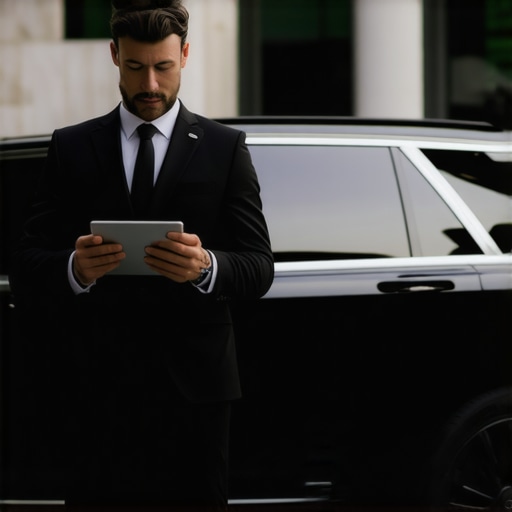
The 10-Minute Buffer That Saves Every Meeting
I live by a simple rule: if you are on time, you are late. For executive roadshows, I insist that my drivers adhere to a specific arrival window. I have found that why most on time drop-offs start with a 10-minute early arrival is a mathematical reality of urban traffic. This buffer is not for standing around; it is your insurance policy against a trash truck blocking a narrow side street or a sudden protest in the financial district. Think of this time as a ‘logistics moat’ that protects your mental clarity.
Why Local Knowledge Beats Every GPS Algorithm
I once sat in the back of a ride-share in Manhattan while the driver followed a GPS into a literal construction pit. Since then, I only work with professionals who understand that why on-time performance depends on local knowledge over GPS is the difference between making a flight and watching it take off from the taxiway. A professional knows which tunnels to avoid on a rainy Tuesday and which bridges will be jammed during a mid-day shift change.
Mastering the Math of Hourly Logistics
When you book by the hour, you are not paying for a seat; you are paying for availability. During a three-city tour, I realized that how hourly rates eliminate the stress of traffic jams changed my entire approach to work. When the meter isn’t ticking and you aren’t worried about ‘surge’ pricing, you can focus on your prep work. You should always run the accuracy test for modern live tracking links before you leave your hotel. If the link lags more than thirty seconds, I call the dispatcher immediately. This level of precision is what separates a successful executive roadshow from a chaotic series of expensive delays. In the back of that car, with your laptop open and a secure connection, you aren’t just traveling—you are operating at peak efficiency.Most travelers assume that the ‘Estimated Time of Arrival’ blinking on their phone screen is a contract. It isn’t; it is a statistical guess based on historical data that often fails to account for a sudden water main break or a snap protest in the city center. In my experience, relying solely on an algorithm is the biggest mistake you can make when your schedule is packed. I have learned that why your real-time tracking link might have a 30-second lag is not just a technical glitch—it is a critical window for error that can lead to missed departures. According to the INRIX Global Traffic Scorecard, urban congestion costs the average driver dozens of hours annually, but for an executive, those hours represent lost deals and damaged reputations. This is why I advocate for a system where why manual dispatching still beats AI for real-time accuracy. A human dispatcher can see a logistics hurdle forming blocks away before the algorithm even registers a slowdown, allowing for a proactive reroute that no app can match. 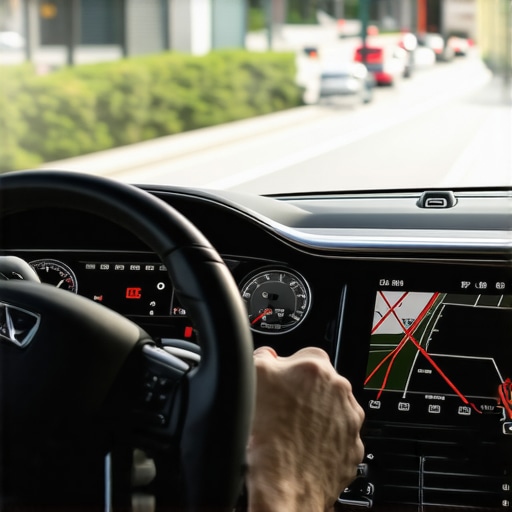 One major ‘oops’ factor I see even seasoned travelers fall into is the ‘price-per-leg’ fallacy. They book the cheapest available option and are shocked when the car arrives smelling like stale tobacco or the driver is visibly fatigued. I never board a vehicle without running the checklist for verifying a luxury sedan before boarding. If the tires are worn or the driver cannot provide commercial credentials, I do not get in.
How do you handle a driver who attempts to take a faster unvetted route?
It is a common dilemma. A driver might claim to know a ‘shortcut’ that isn’t on the pre-approved plan. However, how to handle a sudden route change without stressing your driver requires a balance of authority and tact. You must insist on the vetted path unless they can prove the primary route is blocked. Safety also extends to your digital footprint. I have seen high-profile clients post their live trip location on LinkedIn in real-time—it is a security nightmare. It is vital to understand the hidden risks of sharing your private ride location on social media before you accidentally invite the wrong kind of attention. Ultimately, why safety and timeliness matter in hourly reservation services is about maintaining total control over your environment. Have you ever fallen into the trap of trusting a ride-share app over your own gut instinct? Let me know in the comments. By prioritizing on-time arrival mastering the art of reservation and safety every hour, you transform travel from a variable risk into a calculated success.Maintaining a flawless travel record isn’t about luck; it is about the tools you integrate into your daily workflow. For years, I struggled with manual entries until I mastered how to sync your calendar directly with your chauffeur. This isn’t just a convenience feature; it creates a live link where any flight delay or meeting extension is instantly reflected in the driver’s dispatch view. I have seen too many executives lose their composure because a 2:00 PM pickup was actually a 1:45 PM requirement that never got communicated. By automating the data flow, you remove the ‘human error’ factor that plagues most corporate travel.
The Tech Stack I Trust When Failure Is Not an Option
I don’t just rely on a single app. My protocol involves a tiered verification system. First, I ensure how to confirm your secure booking link is using https before entering any sensitive data. Cybersecurity in transit is a growing threat, and I’ve seen peers fall for phishing attempts that look exactly like reputable limo services. This is why you must know how to spot a secure payment portal before you book. I personally use a virtual credit card for every reservation to add a layer of insulation between my primary accounts and the service provider. Beyond the payment, I always perform the accuracy test for modern live tracking links about twenty minutes before the car is due. If the refresh rate is sluggish, it tells me the driver might be in a dead zone or using outdated hardware. 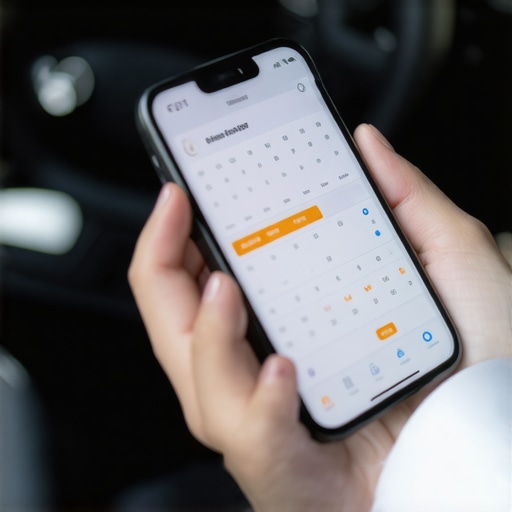
Verify Your Armor Before the Road Hits Back
Long-term success in multi-city travel requires a commitment to vehicle standards. I’ve developed a habit where I never just ‘hop in.’ I take five seconds to look for the one physical marker that proves a vehicle is well-maintained—usually the tread depth and brand of the tires. If a company is cutting corners on rubber, they are cutting corners on your life. This level of scrutiny is why business executives prefer dedicated drivers for multi-stop days. A dedicated professional knows that their car is a tool of your trade, not just a taxi. According to the NIST (National Institute of Standards and Technology) guidelines on mobile security, the ‘Bring Your Own Device’ (BYOD) trend in transportation services has created significant vulnerabilities; this is why I only book through services that provide hardware-encrypted dispatch terminals rather than personal smartphones.
How do I keep this system running without burning out?
The secret is building a ‘logistics moat’ through on-time arrival mastering the art of reservation and safety every hour. I treat my travel schedule as a living document that gets audited every Sunday night. I check for the hidden factors that delay morning transit schedules, such as local marathons or planned roadworks that might not be in the GPS yet. Looking ahead, I predict we will see a massive shift toward AI-driven predictive maintenance for executive fleets, but the human element—the driver who knows exactly where the ‘pothole-free’ lane is—will remain the gold standard. I strongly recommend you try this one advanced tip: the next time you book, ask the dispatcher for the vehicle’s commercial insurance expiration date. It’s a simple move that immediately signals you are an expert who values safety precision the key to reliable hourly reservations for peace of mind. By insisting on these standards, you aren’t being difficult; you are being professional.
What a Decade of Roadshows Taught Me About Real Control
Reflecting on the thousands of miles I have covered, I have realized that the best travel days are the ones where I forget I am even in a car. Here are a few lightbulb moments that changed my game: First, I learned that a driver’s silence is often their greatest professional asset—it means they are focused on the road and respecting your mobile workspace. Second, I have become incredibly protective of my digital footprint; I realized early on why you should never share your booking pin over the phone even if the caller sounds official. Finally, I have discovered that the perfect reservation is not just about the car; it is about the underlying reservation security measures how to book safely and arrive on time that protect your identity as much as your schedule.
The Reliable Tools I Use to Eliminate Logistics Friction
I do not leave my schedule to chance, and neither should you. My personal toolkit is lean but effective. I rely heavily on automated calendar integration—learning how to sync your calendar directly with your chauffeur was the single biggest stress-reducer I have ever implemented. I also keep a physical emergency card with my dispatcher’s direct landline, because technology can fail in a deep underground parking garage. For those just starting to build their own travel protocol, I highly recommend reading up on ensuring safety first your guide to on-time reservations at any hour to understand the industry standards you should be demanding from every provider.
#IMAGE_PLACEHOLDER_E#
Reclaim Your Day Instead of Reacting to Traffic
At the end of the day, executive travel isn’t a luxury; it is a strategic necessity. When you stop worrying about the how and when of your next pickup, you free up the mental bandwidth required to actually win your meetings and close your deals. You deserve a partner who understands that on-time arrival mastering the art of reservation and safety every hour is the baseline of professional service, not the exception. Go out there, book with total confidence, and take back control of your professional day. Have you ever had a close call where a simple 10-minute buffer would have saved your entire afternoon? Let me know in the comments below—I read every single one.