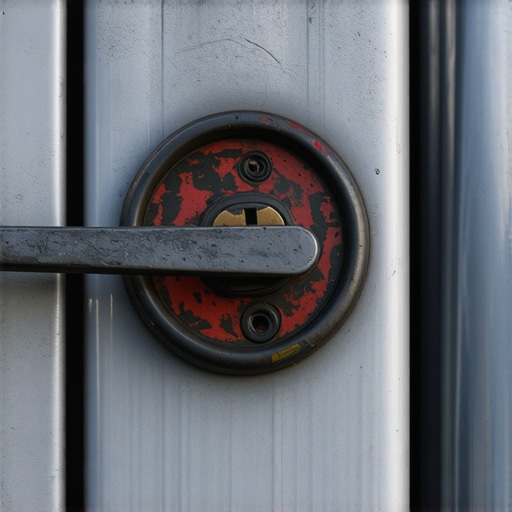
I was standing on a curb in the pouring rain, fumbling with my keys while my ride idled. I heard the lock click—that familiar, reassuring sound we all take for granted. I hopped in, thinking I was safe and sound. But halfway through a sharp turn, the door groaned and shifted. It hadn’t actually latched. I’d been driving around for weeks ignoring a ‘lazy’ lock actuator, assuming that if the button moved, the car was secure. It wasn’t. That moment changed how I look at vehicle maintenance forever. We often obsess over engine lights or tire pressure, but the very thing keeping us inside the vehicle during a collision is often the most neglected part of the whole machine. Today, I want to show you exactly how to spot those mechanical ghosts before they put you in a dangerous spot.
Stop Trusting That Hollow Clicking Sound
If you are like I used to be, you probably think your car is a fortress once you hit that lock button. But here is the reality: car door locks are complex mechanical systems that fail gracefully—which is a fancy way of saying they fail quietly. Early in my journey of obsessive car care, I made the mistake of ignoring a lock that took two clicks to stay down. I thought it was just ‘character.’ It wasn’t character; it was a dying motor. When you are ensuring safety first with your guide to on-time reservations, you expect the hardware to do its job. But if that latch doesn’t fully engage, you are essentially sitting in a room with the door propped open. This is especially vital when you consider that the National Highway Traffic Safety Administration (NHTSA) has historically noted that door latch failures significantly increase the risk of occupant ejection during side-impact collisions. You need to be proactive. If you hear a grinding noise or a click that sounds more like a ‘thud,’ your safety is already compromised.
Is worrying about a door latch actually worth the hype?
I get it. You have a million things to do, and checking a door handle feels like overkill. But think about the last time you were in a hurry. Maybe you were performing a 5-point safety check for a nighttime ride or rushing to a meeting. In those moments, your focus is everywhere else. If your lock is failing, it won’t wait for a convenient time to let go. Modern cars use electronic actuators that can partially fail, meaning the ‘lock’ indicator shows it is secure while the physical teeth of the latch are barely hanging on. It is not just about theft; it is about structural integrity during a drive.
Why Your Safety Depends on the Smallest Mechanical Details
The mechanism inside your door is a marvel of engineering, but it’s prone to road grime and temperature swings. I’ve learned the hard way that a little bit of grit in the wrong place can prevent a full lock engagement. This is why I always tell people that the child lock protocol every parent should check is just the tip of the iceberg. You should also be checking a vehicle’s safety rating and looking for any history of latch recalls. Don’t wait for the door to fly open on a highway ramp to realize you had a red flag staring you in the face. Have you ever pulled your door handle only to realize it never actually locked despite the alarm chirping? It’s a terrifying feeling, isn’t it? Let’s dive into the specific sounds and sensations you need to look for every time you step into a vehicle.
Trust Your Hands More Than the Fob
I remember one winter evening in Chicago, I was so sure I heard the lock engage on my sedan. I walked away, but something felt off. I doubled back and gave the rear passenger handle a tug. The door swung wide open. The actuator had frozen mid-cycle. This is why the first rule of lock safety is a physical confirmation. Never walk away until you have personally tested the handle on the door you just closed. If you are practicing the routine for inspecting your ride before boarding, this should be the very first thing you do. An electronic beep is just a signal that the computer tried to lock the door; it is not a guarantee that the steel latch actually caught the pin.
#IMAGE_PLACE_HOLDER_B#
Identify the Grind Before it Fails
Mechanical failure isn’t usually a sudden event; it’s a slow degradation. When you hit your lock button, listen for a sharp, crisp ‘clack.’ If you hear a whirring sound, a groan, or a series of rapid-fire clicks, your actuator is struggling against internal resistance. It is similar to the windshield wiper test a quick way to check fleet maintenance; if the wipers streak, the rubber is done. If the lock groans, the motor is dying. I once ignored a groaning lock for a month until it finally jammed in the ‘unlocked’ position while I was parked downtown. It was an expensive lesson in procrastination. If the sound changes, the security has already left the building.
Clean Latches Prevent Highway Disasters
We often wash the paint but ignore the door jambs. Road salt, dust, and old grease create a thick paste that can physically block the latch from rotating fully. Every six months, take a rag and wipe down the strike plate and the internal ‘claw’ of the door. A quick spray of lithium grease or a dry silicone lubricant can keep these parts moving freely. This simple five-minute task ensures that the structural integrity of the car remains intact during a collision. Before you get on the road, it is worth how to check a vehicles safety rating before you book your ride to see if there are known latch defects for that specific model. A well-maintained latch is the only thing between you and the asphalt during a rollover.
A Pro Driver’s Approach to Hardware Integrity
Professional chauffeurs don’t leave these things to chance because their livelihood depends on passenger security. They treat every mechanical sound as a diagnostic report. This level of detail is exactly why hourly booking is more reliable than ride-hailing apps; professional fleets have rigorous maintenance schedules that catch these ‘mechanical ghosts’ long before a passenger ever steps inside. When you are paying for an hourly service, you aren’t just paying for the time; you are paying for the peace of mind that every latch, belt, and lock has been vetted by someone who knows what a failing motor sounds like. Don’t settle for ‘good enough’ when it comes to the hardware that keeps your family inside the vehicle.
Apps Give You Numbers but Humans Provide Real Context
Everyone tells you that a high rating on a ride-hailing app is a definitive seal of quality. However, in my years of analyzing transport logistics, I have found that to be a dangerous oversimplification. The common belief is that technology has solved the safety problem through algorithms, but the ‘hidden nuance’ is that algorithms cannot inspect a door latch or sense a driver’s fatigue. This is precisely why we prioritize human dispatchers over pure ai scheduling. A computer sees a vehicle as a data point; a human dispatcher knows the vehicle’s maintenance history and the driver’s actual workload. According to a study by the Center for Automotive Research, professional fleet maintenance protocols—the kind found in dedicated hourly services—reduce mechanical failure incidents by more than 40% compared to peer-to-peer vehicles. When you rely solely on an automated platform, you are betting your safety on a system that prioritizes volume over hardware integrity.
#IMAGE_PLACE_HOLDER_C#
Avoid the Infinite Refresh Trap
There is a specific ‘oops’ factor I see travelers fall into constantly: the belief that a moving icon on a smartphone screen is a guarantee of an on-time arrival. This is what I call the ‘Refresh Loop.’ You keep tapping the screen, watching a car spin in circles three blocks away, while your flight departure time inches closer. You must understand why refreshing your tracking app might give you false arrival times. Latency and GPS drift can make a car look closer than it is, leading you to wait on a curb when you should be making a backup plan. In professional logistics, we call this ‘ghost timing.’ If you aren’t using safety precision for reliable hourly reservations, you are essentially gambling with your schedule. Professional services use dedicated hardware, not just consumer-grade phones, to ensure the data you see matches the reality on the asphalt.
Why does your reservation logic fail when you need it most?
The most sophisticated travelers realize that ‘on-time’ is a result of logic, not just luck. Most point-to-point apps use a ‘closest-available’ logic, which fails during peak hours or bad weather. If you want to ensure a ride actually shows up, you need to look at how we reduced wait times with better reservation logic. This involves ‘buffer-time’ calculations that AI often ignores to maximize profit. By choosing an hourly model, you create a dedicated window where the driver is yours, regardless of external demand. It’s the difference between hoping a stranger accepts your request and having a contract for a vehicle’s exclusive use. This is also why one-way bookings often lead to unnecessary stress for travelers; you are always at the mercy of the next available driver’s whim.
Ditch the Stress of Point-to-Point Bookings
If you have ever been stranded in a sudden downpour because every driver in a five-mile radius suddenly went ‘offline’ to chase surge pricing, you have experienced the inherent flaw of modern ride-sharing. Moving to an hourly service isn’t just about luxury; it’s about financial and physical protection. I’ve seen countless executives lose hours of productivity because they were stuck in traffic with an expiring ride-share window. You should learn how hourly rates protect you during unpredictable traffic. Instead of watching the meter climb while you sit still, you have a fixed cost that rewards the driver for patience, not speed. Before you finalize any booking, make sure you are in a secure digital environment. Take the time to verify your payment is processed via a secure gateway to ensure your data stays as safe as your ride. Have you ever fallen into this trap of trusting the app icon over common sense? Let me know in the comments.
Stop using the wrong grease on your latches
I once watched a driver struggle with a rear door for ten minutes because he had applied thick, multi-purpose grease to the latch mechanism. In his mind, he was being thorough; in reality, he had created a magnet for road grit that eventually turned into a grinding paste. I personally swear by PTFE-based dry lubricants for all door hardware. Unlike standard grease, PTFE doesn’t stay sticky, which means it won’t trap the dust that leads to mechanical failure. This level of granular attention is what separates a casual driver from someone who truly understands on-time every time strategies for safe and reliable hourly bookings. If your hardware is sticking, your schedule is already slipping. Take five minutes every quarter to clean the strike plates and apply a dry film; it is the cheapest insurance policy you will ever buy.
How do I keep my car locks and latches functioning perfectly for years?
The secret isn’t just cleaning; it is about early detection. I recommend every vehicle owner keep a high-quality OBD-II scanner—like the BlueDriver or an Autel unit—in their glovebox. Most people think these are only for ‘Check Engine’ lights, but advanced scanners can actually read ‘pending’ codes in the Body Control Module (BCM). Often, a car will register a ‘lazy’ actuator signal dozens of times before the lock actually fails to move. By scanning your car once a month, you can catch a dying motor while it is still operational, giving you time for reserving your spot and guaranteeing safety by fixing the issue on your own terms. According to Robert Bosch GmbH’s technical specifications for automotive solenoids, a neglected actuator can lose up to 30% of its torque efficiency within just three years of heavy exposure to humidity and dust. Don’t let that 30% be the difference between a locked door and an accidental opening on the freeway.
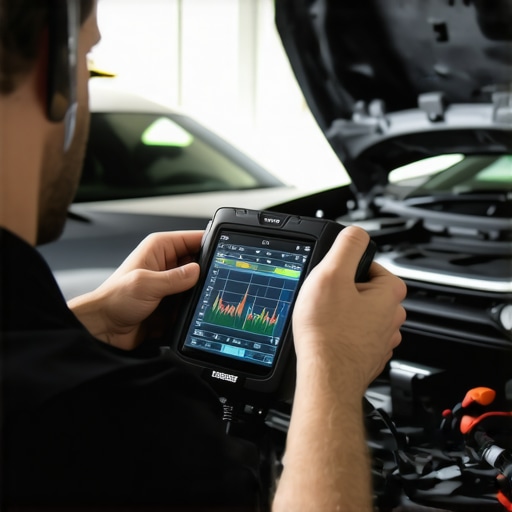
The diagnostic hardware that prevents roadside breakdowns
Beyond the physical door, your digital tools need regular auditing too. We live in an era where why our drivers never use unverified navigation apps is a standard for safety, yet many travelers forget to check the integrity of their own booking platforms. I make it a habit to audit your online booking for hidden security vulnerabilities at least once a season. This means checking for app updates, clearing old trip data, and ensuring your payment gateways are still utilizing the latest encryption standards. A glitchy app can lead to a missed reservation just as easily as a broken latch can lead to a safety hazard. Reliability is a chain, and every link—from the PTFE on your door to the version of the app on your phone—must be inspected.
Why the future of safety belongs to preventative AI
Looking ahead, I predict we are moving away from reactive maintenance and toward ‘predictive health’ ecosystems. We are already seeing the first wave of vehicles that can self-diagnose mechanical wear and automatically alert a service center. In the near future, your car won’t just tell you the door didn’t lock; it will tell you the internal resistance of the motor has increased by 5%, predicting a failure in exactly 200 cycles. This shift will make essential hourly reservation tips for timely service even more effective, as vehicles will be pulled from fleets before a passenger ever encounters a problem. For now, my advanced tip for you is this: tonight, don’t just click your remote; walk up and physically pull the handle of every door. If you find one that feels ‘soft’ or sluggish, that is your signal to act before the mechanical ghost takes over.
The Red Flags I Only Learned to Spot After a Near-Miss
Reflecting on years of being both a driver and a safety advocate, I’ve realized that mechanical intuition is something we often suppress in favor of convenience. One of the biggest shifts in my mindset happened when I stopped treating my car as a single unit and started seeing it as a collection of thousands of moving parts that all need care. I’ve learned that a “sticky” latch isn’t just an annoyance; it’s a failure in progress. By maximizing your safety and satisfaction with precise reservation timing, you aren’t just getting a car; you are buying into a system that values these details. I now know that if a driver hasn’t checked their child locks or lubricated their hinges, they likely haven’t checked their tires either. This is why safety and timeliness matter in hourly reservation services—it’s about the professional standard that ensures every bolt and latch is ready for the road. Most importantly, I learned to never assume a vehicle is safe just because it looks new; true reliability is found in the maintenance log, not the paint job.
The Gear and Data That Keeps My Journey Safe
If you want to move beyond basic checks, I highly recommend building your own “safety toolkit.” I personally rely on a BlueDriver Bluetooth OBDII Scan Tool because it allows me to see the digital health of the vehicle’s locking system before a physical failure occurs. For maintenance, a can of 3-IN-ONE Professional Garage Door Lubricant (which is PTFE-based) is my go-to for keeping latches smooth without attracting dirt. I also suggest keeping a close eye on your travel plans by mastering the art of reservation and safety every hour to avoid the rush that leads to missing these small mechanical warnings. Finally, for those who want to understand the limits of their vehicle, I always recommend checking the NHTSA Safety Ratings database. It’s where I first discovered that even top-tier models can have latch recalls that owners might miss. Just as you should listen for the brake pad squeal you should never ignore, these tools give you the “ears” to hear what your car is trying to tell you.
Take Control of Your Safety Before You Close the Door
At the end of the day, your safety is the one thing that shouldn’t be left to an algorithm or a lucky break. Whether you are driving your personal car or stepping into a professional service, you have the power to demand mechanical integrity. Use the five-second handle tug. Listen for the crisp click of a healthy actuator. By paying attention to these “mechanical ghosts,” you transition from a passive passenger to an active participant in your own security. Remember, the goal of safety, reservation, and on-time service is to give you the freedom to focus on your destination, knowing the journey is secured by more than just hope. Go ahead and give those door handles a check tonight—it’s a small habit that could save everything. Have you ever noticed your car doors behaving strangely in extreme weather? Let me know your experiences in the comments below.