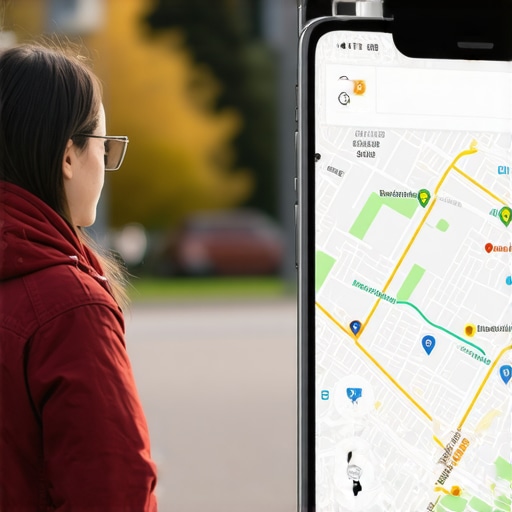
Ever found yourself standing on a busy street corner, glancing at your phone’s map, only to realize that the little blue dot is leading you astray? I can’t count how many times I’ve blindly trusted an app, only to end up a block away from my intended destination. That frustrating moment when technology fails us isn’t just inconvenient—it can also be unsafe, especially when precise timing and safety are on the line.
Seeing Is Believing: My Wake-Up Call with App Maps
One night, rushing to catch a flight, I relied solely on my app to navigate through a series of unexpected road closures. The map suggested a quick detour, and I followed it without a second thought. Turns out, the app’s real-time tracking was off due to signal loss in a concrete parking garage. I arrived late and stressed, questioning whether I should have just trusted my instincts and what I could see with my own eyes. That night was a revelation—sometimes, technology isn’t enough.
This experience pushed me to explore a different approach, one rooted in personal observation and local knowledge. The goal? To understand why trusting your own eyes can be more reliable than digital maps, especially in critical moments like catching a ride or ensuring safety during travel.
Why Your Eyes Might Save You More Than Apps
Apps can be invaluable, no doubt about it. They provide convenience, real-time updates, and route planning. But they also depend heavily on signals, data accuracy, and the infrastructure they’re built on. In dense urban environments or remote areas, these elements can falter. Conversely, your eyes and senses are always active, providing immediate feedback—seeing, hearing, and even feeling—things that no app can replicate.
In fact, studies show that human perception sometimes outperforms technology, particularly when it comes to spatial awareness. A report from the Society of Human Factors emphasizes that our natural senses are essential for safety and quick decision-making, especially when tech signals become misleading or unavailable. Relying solely on apps can lull us into a false sense of security, ignoring critical clues around us.
If you’ve ever experienced a missed pickup or a driver who arrived late because the app’s map was off, you’re not alone. Recognizing the limits of digital navigation and sharpening your observation skills can be a game-changer. Want to learn how to combine your own insights with technology for the safest, most reliable reservations? Stay tuned—I’ve got practical tips that will help you stay in control of your travel plans and safety.
Is Trusting Your Eyes Really Worth the Hype?
I admit, I initially thought my phone’s GPS was foolproof. But my early mistake was ignoring local landmarks and traffic cues, thinking the app had it all covered. That oversight taught me a vital lesson: technology should enhance, not replace, our natural judgment. Do you often find yourself depending entirely on apps, even when your instincts scream otherwise? If so, you’re not alone, and there’s a better way forward—one that balances tech with trust in your own senses.
Sync Your Schedule with Your Reservation
Start by creating a detailed itinerary and sharing it with your driver or dispatch through a secure link, like the ones described in this method. Use calendar integrations that update in real-time to keep everyone on the same page, reducing last-minute surprises.
Set Your Pickup and Drop-off Buffers
Apply the ‘1245 Rule’—aim to reserve your vehicle at least 45 minutes before your schedule, with a 12-minute buffer for unexpected delays. For example, if your meeting is at 10:00 AM, book your ride for 9:45 AM, then add a 12-minute cushion to account for traffic, parking, or last-minute changes. This approach ensures on-time arrival even when disruptions occur, akin to stacking blocks to stabilize a tall tower.
Verify Your Driver’s Identity and Car Details
Before the ride, perform a quick visual check: ensure the vehicle matches the booking details, and verify the driver’s badge—these simple steps act as your safety net, detailed in this checklist. Avoid relying solely on app maps; instead, use in-person cues like license plate and uniform to confirm you’re getting into the right vehicle.
Communicate Clearly and Securely
Share your live transit status with trusted contacts via encrypted links, ensuring they stay informed (see this method). Confirm your driver with a discreet code or badge and maintain open, direct communication—this reduces confusion and enhances safety.
Anticipate Potential Delays
Use real-world data, like the ‘Traffic Buffer Formula,’ to estimate how long unforeseen traffic might add to your journey. For instance, during a major city event, expect more than the average delay and adjust your reservation accordingly. Always check recent local conditions before booking to prevent mismatches between your schedule and the actual ride duration, as discussed in this guide.
Leverage Technology Without Blind Trust
Use GPS tracking as a supplementary tool, not your primary source. Cross-reference live maps with local landmarks and driver updates. Keep an eye on app notifications for ETA changes, but rely on your personal observations to decide whether to wait or seek alternatives. This balanced approach is highlighted in this article.
Prepare for the Unexpected
Have a backup plan, like knowing the location of nearby rideshare stands or public transit options, in case your driver reports delays or cancellations. Confirm cancellation policies beforehand—adhering to the 48-hour rule minimizes penalties and offers peace of mind (details here). Practicing these steps turns uncertain, stressful situations into manageable hiccups, ensuring your schedule stays intact regardless of hiccups along the way.
Many travelers and professionals believe that quickly booking a ride, setting the destination, and trusting the app’s ETA is enough for a safe and punctual journey. However, this simplistic view overlooks critical nuances that can make or break your safety and timeliness. One common myth is that pre-scheduling or using hourly reservations guarantees absolute precision. In reality, overlooking the importance of comprehensive verification steps and nuanced timing strategies can lead to delays or safety gaps.
Why Just Booking Isn’t Enough for True Reliability
Contrary to popular belief, reserving a vehicle hours in advance doesn’t eliminate the risk of delays or mix-ups. Many assume that once the reservation is confirmed, all is set. Yet, factors like traffic unpredictability, driver professionalism, and your own preparation play vital roles. Relying solely on digital confirmation without performing a quick visual check or verifying driver identity can open up safety loopholes. External studies, such as those from the Society of Human Factors, reveal that human verification and situational awareness often outperform automated systems in complex environments.
For example, a common pitfall is trusting the map indicators during congested urban traffic or in underground parking structures, where GPS signals are weak. This often results in late arrivals despite a confirmed reservation. To mitigate this, integrating personal observation—like the vehicle’s appearance, driver uniform, and license plate—can significantly enhance reliability.
Are Your Reservation Strategies Tiring or Time-Saving?
Many assume that sticking to the app’s ETA minimizes effort. However, this overlooks the value of proactive timing buffers and real-world checks. Advanced reservation tactics, such as the 1245 Rule—booking 45 minutes before an event with a 12-minute cushion—are proven to improve punctuality. Combining technology with personal awareness—like monitoring local traffic conditions or confirming driver details in advance—prevents last-minute surprises and safety issues. This hybrid approach is supported by experts in transportation safety, emphasizing that layered verification reduces risk.
Always remember, true safety and punctuality come from a combination of precise reservations and diligent personal checks. Don’t fall into the trap of trusting technology exclusively; instead, enhance your strategies with real-world insights, like inspecting driver credentials or verifying communication channels. For comprehensive safety measures, review how precision in reservation planning can make a decisive difference.
Have you ever fallen into this trap? Let me know in the comments!
Keeping your reservation system working smoothly over time requires a combination of the right tools, regular maintenance, and strategic adjustments. Personally, I rely on a few key pieces of equipment and software that have proven indispensable in ensuring punctuality and safety. One essential tool is a dedicated portable power bank, like the Anker PowerCore series, which guarantees your mobile device remains charged during long days of coordinating pickups and monitoring changes. A dead phone often leads to missed updates or miscommunications, so investing in reliable power sources is fundamental.
On the software front, I find that scheduling apps integrated with real-time traffic data, such as Kalido or Route4Me, help forecast delays and adjust my plans proactively. These tools analyze historical traffic patterns and current conditions, allowing me to fine-tune reservations well in advance. For example, I often set a 15-minute buffer before my scheduled reservation, a tip supported by industry experts to account for unforeseen congestion (details here). Additionally, I use a VPN to protect my data when sharing reservation details through secure links, ensuring privacy and preventing unwanted access.
Regular physical maintenance of my vehicle, such as checking tire pressures, brake function, and fluid levels, is another pillar of reliable service. A well-maintained vehicle minimizes unexpected breakdowns, directly impacting punctuality and safety. Setting reminders to perform monthly checks keeps my fleet ready for any schedule.
Looking ahead, I believe that automation will play an even larger role. AI-driven predictive maintenance systems, which monitor vehicle health and alert you to issues before they become critical, are becoming more affordable and accurate. Integrating such systems into your fleet management can drastically reduce downtime and enhance reliability. For example, vehicle telematics solutions like Geotab offer real-time diagnostics, making long-term maintenance more strategic rather than reactive.
How can I keep my reservation system reliable year after year?
Consistent review and updating of your tools and procedures are key. Schedule quarterly audits of your app integrations to ensure they operate seamlessly with your devices, and review your physical vehicle assessments. Staying current with industry innovations, like AI-based diagnostics, will help future-proof your operations. To streamline this process, consider establishing a routine maintenance calendar and a digital checklist aligned with your reservation workflow.
For those looking to elevate their reliability, experimenting with advanced scheduling, such as the precise reservation timing techniques, can be transformative. Implementing these tactics can significantly improve your on-time performance, giving you peace of mind and building trust with clients or colleagues. Give one of these tools or methods a try today, and observe how your reliability scales with strategic upkeep and innovation.
Over my years navigating the complex world of reservation, on time, safety, and hourly services, I’ve uncovered a few gems that transformed my approach from reactionary to strategic. These lessons, born from mistakes and victories, have become my secret weapons for dependable travel and safety management.
What the Experts Keep Hidden About Reservation Success
- Stop Relying Solely on Technology: Technology is powerful, but your instincts and verification routines are irreplaceable. Never skip confirming whom you’re trusting with your safety, especially during late-night or urgent trips. Personal verification, like checking driver badges or vehicle details, often saves the day.
- Timing is More Than a Suggestion: The 1245 Rule isn’t just a catchy number—it’s a game-changer. Reserving at least 45 minutes before your scheduled time with a 12-minute cushion drastically reduces the risk of delays, corralling unpredictable city traffic and last-minute surprises.
- Context Over Convenience: Pre-bookings and scheduled rides are helpful, but always consider local conditions—a major event or road construction can throw off your plan. Cross-reference your reservation with real-time data and local insights to keep your plans on track.
My Personal Toolbox for Rock-Solid Reservations
- Reliable Power Bank: Never get stranded without battery life. A good portable charger ensures your communication lines stay open, especially when coordinating multiple reservations or handling unexpected issues.
- Traffic and Scheduling Apps: Tools like Kalido and Route4Me help me anticipate delays and adjust on the fly. They provide a layer of real-world data that complements your reservation, ensuring punctuality.
- Secure Communication Channels: Encrypt your reservation details and personal info with trusted methods. Sharing your transit status with loved ones via secure links not only improves safety but also keeps everyone informed without leaks.
Your Journey Begins Now: Own the Experience
Choosing safety and punctuality in reservations isn’t just about avoiding mishaps—it’s about reclaiming confidence over your trips. Every route, every verified driver, and every strategic buffer you implement builds a safer, smoother future for your travels. Remember, combining smart technology with sharp personal awareness is the secret to consistent success.
Have you ever faced a situation where trusting your senses saved your trip? Share your story below—I’m eager to hear how you’ve turned cautious observations into confident decisions!