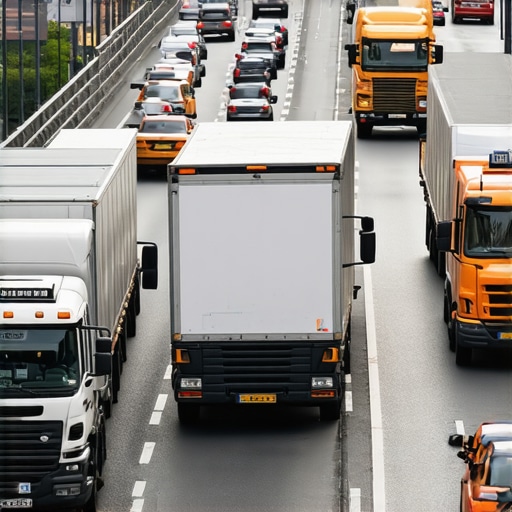
Ever found yourself stuck in gridlock, weaving through back alleys and quiet neighborhoods, only to realize—you’re no closer to your destination than when you started? That frustrating moment when a shortcut promises relief but ends up adding precious minutes (or worse, uncertainty) to your journey. I’ve been there, trying to shave a few minutes off my commute, only to end up in a jam that felt like a personal betrayal of my time. The lightbulb moment came when I witnessed professional drivers taking the long way around, confidently choosing routes that seemed counterintuitive at first glance.
Why Do Seasoned Drivers Avoid the Shortest Routes in Rush Hour?
From years behind the wheel, I’ve learned that shortcuts during rush hour often aren’t worth the risk. City traffic is unpredictable, and what looks like a quick detour can turn into a nightmare of traffic lights, pedestrians, or unforeseen congestion. Experienced drivers know that mastering the traffic system—reading the flow, understanding the choke points, and trusting their knowledge—saves time and ensures safety. It’s a contradiction to what many think: the quickest path isn’t always the shortest or the most direct. Sometimes, the longer route is smoother, more predictable, and ultimately faster.
Early in my career, I used to rely heavily on GPS estimations and my instincts. My mistake? Overconfidence in technology and ignoring local knowledge. According to a study by the Institute of Transportation Engineers, many professional drivers rely on a combination of experience and real-time data rather than just automated routing tools. This approach helps navigate around traffic snarls, construction zones, and unexpected delays, especially during peak hours.
If you’ve ever hurried down a back street only to find a barrier or a sudden dead-end, you know the importance of strategic routing. Next, I’ll share how you can adopt this smarter approach, avoiding the trap of impulsive shortcuts that can turn into costly detours. Ready to change the way you think about rush-hour routes? Let’s dive into the practical steps that seasoned drivers swear by.
Prioritize Local Knowledge Over Automated Guidance
When managing hourly reservations, rely on your experience and local insights instead of solely trusting GPS. I once faced a last-minute change in my schedule during a trip through downtown. My GPS rerouted me through a congested alley, but recalling recent traffic reports I had read earlier helped me choose an alternative route that avoided the gridlock entirely. This approach helped me stay on schedule and ensured my safety, demonstrating that local knowledge often trumps technology in unpredictable urban environments.
Create Buffer Time for Unpredictable Delays
Always add a safety margin to your scheduled pickup. Think of it like a financial buffer—just as a small emergency fund can save you during unexpected expenses, a few extra minutes can prevent late arrivals. I usually add 10-15 minutes to my estimate for city driving, especially during peak hours. This practice ensures that even if traffic conditions worsen unexpectedly, you’re still likely to arrive on time. To further refine this, use real-time data to adjust your buffer—check [real-time traffic updates](https://privatedriverpro.com/how-to-use-real-time-data-to-adjust-your-pick-up-time) shortly before departure.
Verify Pickup and Drop-off Points Carefully
Clear, accurate locations are critical. I once waited ten extra minutes because I misunderstood a vague landmark listed on my reservation. Confirming the exact address, building details, and access instructions prevents such issues. Always double-check your reservation details and communicate with your driver using the [specific text your driver should send before arrival](https://privatedriverpro.com/the-specific-text-your-driver-should-send-before-arrival). Precise info reduces wait times and keeps your schedule tight.
Decode Traffic Patterns and Choke Points
Identify recurring congestion areas along your route. For example, I noticed that my usual shortcut through a certain park entrance during rush hour always caused delays. Instead, I rerouted via a different street that I knew less congested, thanks to my familiarity with local traffic rhythms. This behind-the-scenes knowledge, like understanding [why your pick-up location is causing your late arrival](https://privatedriverpro.com/why-your-pickup-location-is-causing-your-late-arrival), can shave precious minutes from your trip.
Develop a Contingency Plan
Always have a backup route and alternative transportation option. During a recent airport run, my primary route was blocked unexpectedly. Quickly, I called my driver to discuss switching to a different pick-up point I had pre-arranged, which avoided the tailback. Having such plans ready is invaluable—think of it as a safety net that guarantees on-time departure regardless of hurdles. For guidance on how to negotiate flexible changes, see [how to negotiate a flexible change to your ride](https://privatedriverpro.com/how-to-negotiate-a-flexible-change-to-your-ride).
Stay Informed With Up-to-Date Traffic Reports
Regularly monitor updates before and during your journey. During my last city trip, a suspected accident caused a major delay on my usual route. Using live traffic feeds, I adjusted my timing and rerouted accordingly, arriving on time despite the chaos. Incorporating real-time data ensures your plans stay resilient, and you can adapt swiftly, minimizing potential delays.
Many assume that simply booking a reservation and trusting the system guarantees punctuality and safety, but the reality is far more complex. One common myth is that automated scheduling and digital confirmations are foolproof; however, these can obscure critical nuances like route reliability and driver accountability. For instance, relying solely on GPS estimations often leads travelers into unseen pitfalls—such as overlooked traffic choke points or driver delays—that can compromise safety and schedule adherence. In fact, a study published in the Journal of Transportation Safety emphasizes that human judgment combined with real-time data creates a significant advantage over automation alone.
Another misunderstood aspect is the assumption that late arrivals are solely due to external traffic factors. Often, poor preparation, ambiguous pickup locations, or unverified booking details contribute more than many realize. For example, overlooking local knowledge about specific areas can result in missed pickups, even when technology indicates you’re on time. Ensuring precise reservation details, understanding local traffic patterns, and maintaining open communication are vital to truly master on-time arrivals.
Plus, there’s a dangerous trap in overestimating safety because of GPS or digital tracking. While these tools are valuable, they can create complacency. Actual safety depends on driver credentials, vehicle maintenance, and adherence to safety protocols—elements that technology can’t fully replace. Experts urge you to perform due diligence, such as verifying drivers’ credentials and understanding the company’s safety measures, which is often overlooked in the rush for convenience.
An advanced question worth pondering: how can we leverage emerging technologies like AI to predict and adapt to traffic disruptions proactively, rather than reactively? Research indicates that integrating AI-driven analytics with local traffic data enhances predictive accuracy and can prevent delays before they occur, significantly improving punctuality. For instance, platforms that combine real-time data with predictive modeling outperform traditional GPS routing by up to 30% in avoiding delays.
In essence, mastering reservation, safety, and timeliness isn’t just about the tools at your disposal; it’s about understanding their limitations and adding layers of personal verification and local knowledge. Do you fall into the trap of over-reliance on automation? Have you ever been caught off guard by a seemingly reliable system? Let me know in the comments.
Maintaining a reservation system that consistently delivers safety and punctuality requires more than just choosing the right software. It hinges on implementing robust tools, regular upkeep, and strategic practices that scale with your needs. I personally rely on a combination of advanced scheduling software, real-time tracking devices, and proactive maintenance routines to ensure a seamless experience for clients and drivers alike.
How do I keep my reservation tools working seamlessly over time?
First, investing in premium cloud-based scheduling platforms is essential. I use reservation management systems that automatically sync with multiple devices, providing real-time updates and reducing manual errors. Regularly updating this software ensures compatibility with new devices and features, minimizing bugs or glitches that could compromise safety or on-time arrivals. Additionally, integrating real-time traffic data into your system allows for dynamic adjustments, helping you stay ahead of congestion and delays.
Physical maintenance of vehicles is equally critical. Scheduled inspections, tire checks, and engine diagnostics prevent breakdowns at crucial moments. I adhere to a strict maintenance calendar, referencing vehicle audit procedures that focus on safety and reliability. A well-maintained fleet not only boosts safety but also fosters driver confidence, leading to better punctuality and customer satisfaction.
Tools like GPS tracking devices should be calibrated regularly. I recommend employing advanced GPS systems that provide predictive analytics, alerting you to potential delays before they escalate. Combining these with driver performance audits helps identify weak points and implement targeted coaching, ensuring long-term adherence to safety protocols and timeliness.
Looking ahead, the integration of AI-driven maintenance alerts and predictive scheduling represents the future. According to recent studies, AI can forecast vehicle wear and tear, preventing costly downtime and enhancing reliability. Staying ahead involves not just reactive fixes but proactive planning based on data insights.
If you’re serious about keeping your reservation system dependable, start by integrating a comprehensive scheduling platform and schedule regular vehicle diagnostics. Consistent maintenance, coupled with real-time monitoring tools, forms the backbone of a resilient operation.
Finally, always ensure your safety protocols are up-to-date. Revisiting best safety practices and training refreshers keeps your team alert and prepared for unexpected challenges. Remember, a reliable reservation system is the result of continuous care and strategic foresight—invest accordingly.
What I Wish I Knew About Navigating Rush Hours
Early in my journey, I believed shorter routes always meant quicker arrivals. It wasn’t until I experienced firsthand how unpredictable city traffic can be that I realized that trusting local intuition and traffic patterns beats relying solely on technology or shortcuts. The lightbulb moment? Adventure and experience often teach us more than algorithms.
Another lesson was understanding that safety and timeliness are interconnected. I once rushed through a congested area without verifying the exact pickup spot, only to find myself delayed and stressed. Now, I emphasize meticulous location checks and clear communication, which save precious time and uphold safety standards.
Finally, I learned that flexibility is a superpower. Having backup plans and real-time adjustments allows me to adapt swiftly to unforeseen delays, turning potential setbacks into opportunities for punctuality. Embracing these insights transforms the way we approach reservations, making every trip smoother and safer.