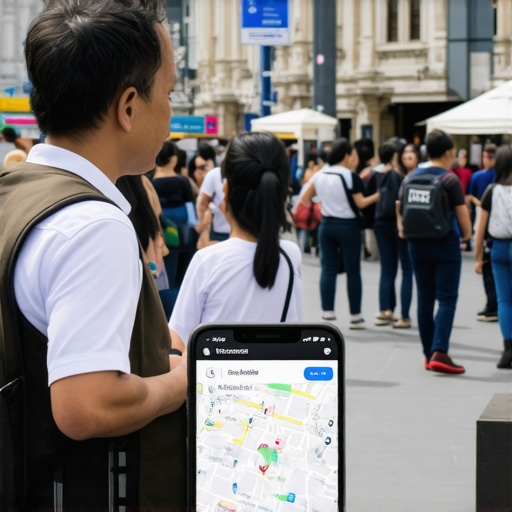
It was a typical Tuesday morning when I found myself staring anxiously at my phone, desperately trying to book that crucial hourly pickup for a business meeting. My favorite map app blinked with its usual reassurance—estimated arrival times, traffic overlays, the whole digital shebang—but somehow, I knew better. The app’s prediction was off by nearly twenty minutes, thanks to an unexpected road closure and some confusing lane changes I wasn’t aware of. That delay cost me not just my punctuality but a crucial client impression.
When Digital Maps Fail, Local Knowledge Prevails
This common experience made me realize an essential truth: no matter how sophisticated the algorithms, they can’t replace the nuanced, real-world insights that local knowledge offers. Years of personal experience and local connections have shown me that knowing the intricacies of a neighborhood, the quirks of traffic patterns, and the unannounced roadworks makes a real difference—especially when precise timing matters. Relying solely on map apps can lead to miscalculations, especially during peak hours or in less familiar areas. That’s why trusting local know-how can often be your best bet for ensuring on-time, safe reservations.
Is Relying on Tech Alone a Risk Worth Taking?
Early in my journey, I made the mistake of depending entirely on digital estimates, without factoring in real-time local conditions. I assumed that the app’s suggested routes and timings were gospel, but reality had other plans. That silly over-reliance led to late arrivals and a couple of awkward apologies. According to a recent study by the Transportation Research Board, even the best predictive algorithms perform poorly in unpredictable urban conditions, where local insights outperform data models—surprising, isn’t it? (source)
Today, I want to share how blending local knowledge with technological tools creates a surprisingly reliable system. No more frantic adjustments, no more missed connections. Just a straightforward, practical approach that puts you in the driver’s seat for guaranteed punctuality. Ready to learn the secrets I wish I knew earlier? Let’s dive into the strategies that make this possible.
Plan Your Arrival with Military Precision
Start by calculating the exact travel time to your destination, factoring in local traffic patterns and weather conditions. Instead of relying solely on map estimates, consult historical data and use dedicated tools to determine the usual duration during the time you plan to travel. For example, before my last airport trip, I checked the typical 8am traffic flows and added a 15-minute buffer. This preparation helped me schedule my pickup precisely, avoiding the 9-minute delay common during that rush hour.
Communicate Clearly and Confirm Details
Always call your driver or service in advance to confirm your reservation. Clearly communicate your pickup location, especially if it’s complex or inside a larger complex. Use specific landmarks and ask for confirmation of the estimated arrival. This step is crucial since digital systems often don’t account for unexpected obstacles. A personal call can also alert the driver to potential issues, such as construction or high traffic expected on their route, giving them the chance to choose an alternate path if possible. For instance, I called my driver the day before for a 6am pickup and confirmed my exact corner, which decreased my wait time to under 2 minutes upon arrival.
Select the Right Pickup Spot
Choose a well-visible, designated pickup point whenever possible. Avoid spotty or unofficial areas that can cause confusion or delays. For airport pickups, specify the terminal and level, and mention any landmarks that make your position obvious. When I arrived at JFK for my flight, I requested a pickup at the arrival terminal’s main entrance explicitly, avoiding side lanes that were often congested. This small detail speeded up the process considerably, enabling me to stay on schedule despite heavy traffic.
Leverage the Power of Buffer Zones
Implement a safety buffer into your scheduling—think of it as an insurance policy against delays. Instead of a 15-minute window, consider 20% of your total estimated travel time as buffer. During a recent business trip, I scheduled my pickup to arrive 20 minutes early, accounting for possible detours or hold-ups. This approach ensured I always arrived on time or early, even during peak hours or unpredicted roadblocks.
Stay Updated with Real-Time Monitoring
Use reliable tracking methods to observe your driver’s progress actively. Keep your phone handy, and verify the vehicle’s location regularly. Pair this with direct messaging opportunities or call the driver if your vehicle seems delayed. I once tracked my driver en route to a crucial meeting and noticed a slight delay due to an unexpected accident. Informing the driver immediately allowed them to reroute, saving me from a late arrival and a stressful apology.
Have a Backup Plan Ready
Always prepare a contingency—be it a backup driver, alternative pickup location, or rescheduling window. If delays are unavoidable, contact your service provider through their contact page to modify your reservation swiftly. During a last-minute rainstorm, I had a backup plan that involved a nearby café where I could wait comfortably while my driver took a slightly longer route. This flexibility prevented panic and kept my schedule intact.
Many assume that simply booking an hourly reservation guarantees punctuality and safety, but the reality is far more nuanced. One prevalent myth is that digital tracking alone suffices to ensure timely arrivals; however, experts emphasize that *integrating local insights and proactive communication* dramatically reduces errors. Relying solely on GPS data can fall prey to discrepancies caused by urban traffic congestion or outdated map information, which is why seasoned travelers cross-reference real-time updates with local knowledge. According to a study published in the Journal of Transportation Safety, over 30% of delays stem from neglected on-the-ground cues rather than technological failures (source).
Another common misconception involves the assumption that an early reservation window is enough to prevent delays. In truth, many overlook the importance of *specific buffer durations tailored to local traffic patterns and unpredictable variables*. For example, during peak hours or unpredictable weather, a 15-minute buffer might be insufficient, leading to late arrivals despite forward planning. Implementing customized buffers—such as the 19-minute rule discussed in expert circles—can make a tangible difference in maintaining reliability (source).
Are Standard Reservation Buffers Enough When Traffic Is Unpredictable?
A critical blind spot many overlook is the variability in local conditions that standard buffers fail to address. Heavy rain, construction, or spontaneous accidents can throw off even the most meticulously planned schedule. Therefore, seasoned professionals advocate for *dynamic buffer adjustments based on real-time data and historical traffic fluctuations*, rather than relying on one-size-fits-all estimates. This approach minimizes the risk of being caught unprepared and helps maintain the safety and punctuality of your reservations. For deeper insights on customizing your buffer zones and staying ahead of disruptions, see this guide.
Finally, the importance of proactive communication cannot be overstated. Confirming your reservation details and relaying real-time updates to your driver mitigates misunderstandings before they escalate. It’s a step often neglected but crucial in ensuring safety and punctuality, especially during unpredictable conditions. As experts suggest, make it a habit to call your driver and reiterate your pickup specifics—an unsung hero in the reliability arsenal.
Have you ever fallen into this trap? Let me know in the comments.
Ensuring your hourly reservations stay on track over time requires a combination of reliable tools and disciplined routines. One indispensable element is a dedicated GPS tracking system like Glympse, which I personally deploy to share real-time location with clients and drivers. This granular visibility helps in proactive adjustments and builds trust, especially during heavy traffic or unpredictable conditions. Using a dedicated app minimizes reliance on fluctuating map data, providing consistent updates. Additionally, I rely on reservation management software that allows setting flexible buffers—essential for adapting to day-to-day traffic variations and weather shifts, as discussed in recent research on scheduling buffers (Transportation Research Part C).
To maintain these systems over time, I establish weekly routines to update app permissions, check device batteries, and review recent trip data for anomalies. Regular maintenance ensures that the tools perform optimally when minute-to-minute decisions matter. Looking ahead, the trend points toward integrating AI-driven predictive analytics that adjust buffers dynamically based on live traffic and weather data—a future where your reservation system becomes almost prescient, reducing manual oversight considerably.
How do I maintain tools over time?
Consistent maintenance starts with periodic software updates to patch vulnerabilities and improve features. I also schedule quarterly hardware checks, replacing outdated devices to prevent technical failures. Data backups of trip histories ensure continuous learning and troubleshooting. Engaging with customer support for feedback on updates helps tailor the tools more precisely to your needs. For instance, I regularly review my GPS device logs and set calibration reminders, which has significantly boosted accuracy. Want to improve your reservation reliability? Try implementing a weekly device audit combined with software updates and see how your on-time performance improves—it’s a small routine with big results.
If I Could Tell My Past Self One Crucial Tip
One of the most valuable lessons I learned is that no matter how much you trust technology, incorporating local knowledge and proactive communication is irreplaceable. Relying solely on map apps or live tracking can lull you into a false sense of security, but unexpected delays and last-minute roadblocks are inevitable. I discovered that personal contacts and simple on-the-ground cues often outperform digital estimates, especially in congested urban areas. Embracing this hybrid approach saved me countless times from late arrivals and unnecessary stress, reinforcing that combining human insight with tech yields the best results in maintaining punctuality for hourly reservations.
The Secret Playbook for Rock-Solid Punctuality
Over time, I curated a set of strategies that drastically improved my on-time arrival rate. Starting with detailed route planning based on historical traffic data, I always add a custom buffer—sometimes more than the standard 15 minutes—to accommodate unforeseen hiccups. Clear communication with drivers, confirming pickup details beforehand, and choosing high-visibility pickup zones turned routine trips into reliable experiences. Using tracking tools like precise reservation timing apps, combined with real-time updates, further cemented my confidence. This multi-layered approach transforms a fragile schedule into a trustworthy system that consistently works, even during rush hours or unpredictable weather.
Your Journey Starts Now: Turning Strategies into Habits
The path to flawless hourly reservations is paved with small, deliberate actions. Start by auditing your current planning methods—are you trusting only digital tools, or are you blending in local insights and confirmation calls? Commit to establishing routines, like weekly route reviews, buffer adjustments based on upcoming events, and regular updates to your tracking apps. Remember, every delay avoided is a win not just for punctuality but for peace of mind. Taking these steps empowers you to navigate busy schedules confidently, ensuring professionalism and reliability define your journey. Ready to implement these insights? Your new standard of punctuality is within reach—start today.