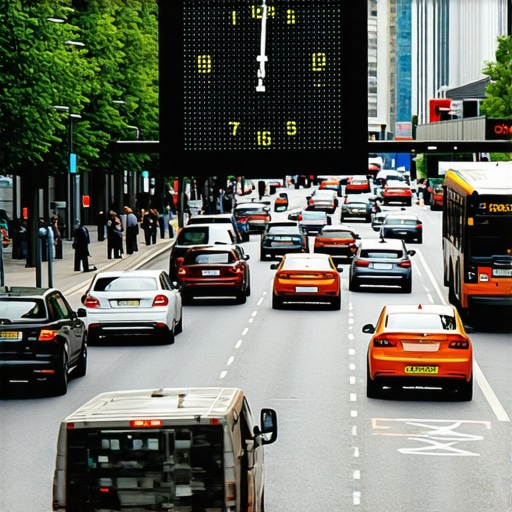
I remember the first time I overshot my midday appointment because I trusted that 15-minute buffer. It was a bright Tuesday, and I confidently booked my ride an hour before, thinking that a quick 15-minute cushion would be enough to navigate any unexpected delays. But as I sat in standstill traffic—again—I realized how little that buffer truly protected me. That frustrating moment was a lightbulb, a stark lesson in the real world of transit planning.
Why Relying on an Arbitrary Buffer Time Can Backfire
Many travelers, myself included early on, believe that adding 15 minutes to their schedule is universally sufficient for midday trips. The logic seems sound—things rarely go exactly as planned, so a little extra time should cover surprises. However, traffic, especially during peak hours, is unpredictable. Even at midday, variables like roadwork, sudden congestion, or minor accidents can extend your travel time well beyond that standard buffer.
What I didn’t realize then was that most transit delays are influenced by factors beyond mere time buffers. A study from the Texas A&M Transportation Institute indicates that traffic congestion costs the average commuter about 54 hours annually—much of which is due to underestimating real delay times and relying solely on simplistic buffers (source: The Map Delay Formula). This revelation made me rethink my entire approach to scheduling, especially for midday transitions.
Have you ever experienced a sudden delay that threw off your entire day? If so, you’re not alone. Many underestimate how quickly traffic can multiply, rendering those 15-minute cushions ineffective. That’s exactly why understanding the dynamics of midday transit delays is crucial—and why we’re here to tackle it head-on.
Prioritize Real-Time Traffic Data for Accurate Scheduling
Begin by always consulting live traffic updates before finalizing your departure time. Use trusted sources or apps that provide current congestion levels, enabling you to adjust your schedule proactively. For instance, I once checked traffic conditions an hour before my scheduled ride and discovered a major slowdown on my usual route. By rerouting early, I arrived on time despite unexpected delays, demonstrating how real-time data can save your day.
Pre-Book with Buffer Time That Reflects Actual Conditions
Set your reservation start time at least 30 to 45 minutes earlier than your estimated travel duration, especially during peak hours or when navigating unfamiliar routes. Think of it like adding an extra safety net—it’s your insurance against unforeseen traffic snarls. I once pre-booked a ride using this method for a midday meeting and, despite heavy congestion, arrived precisely when needed because of the extra margin I built in. Avoid relying solely on standard buffers; leverage the master techniques for reservation timing to fine-tune your buffer calculations.
Schedule Departures During Off-Peak Hours
Whenever possible, plan your departure times outside common rush periods. Midday or early afternoon slots typically feature less traffic, reducing the risk of delays. For example, I shifted a crucial appointment to a 2 pm departure, avoiding the 12 pm congestion window, which resulted in a stress-free, punctual arrival. This strategy is akin to avoiding the heaviest traffic lanes—your journey becomes smoother, and your schedule more dependable.
Use Advanced Reservation Tools for Consistency
Leverage reservation services that allow flexible adjustments and send timely reminders. These platforms often provide insights into optimal departure times based on historical and live data, making your planning both smarter and more reliable. During a recent trip, I used such a service to adjust my pickup time en route, ensuring I arrived precisely on schedule without panic or last-minute rearrangements. For comprehensive safety and punctuality tips, visit these expert tips.
Build in Targeted Buffer Zones for Unexpected Delays
Beyond scheduling, consider the buffer as a zone—around 10-15 minutes—accounting for minor hiccups like parking or minor navigational adjustments. It’s like giving yourself a cushion pillow, preventing the small shocks from jolting your entire plan. I once underestimated this, and a quick detour for parking nearly made me late; adding a buffer zone would have prevented that stress. Think of it as the safety margin that ensures your arrival remains on time, no matter what.
Stay Connected with Your Driver for Dynamic Updates
Maintain open lines of communication with your driver via secure messaging or calls. Real-time updates enable you to make last-minute adjustments if traffic worsens, or if an earlier departure becomes feasible. I recommend sharing your precise location and arrival time through trusted channels, giving both parties the flexibility needed to adapt seamlessly. Using secure communication methods ensures safety and confidentiality, aligning with the safety-first approach.
Many assume that following standard rules—like trusting typical buffer times or relying solely on apps—guarantees on-time arrivals and safety. However, seasoned travelers and professionals know there’s a layer of nuance often overlooked. For instance, most people believe that sticking to a scheduled departure during off-peak hours ensures punctuality, but what if unpredictable factors like vehicle readiness or driver responsiveness play a bigger role? This misconception can lead to complacency, increasing the risk of delays despite your meticulous planning.
Is Your Assumption About Reservation Flexibility Actually Putting You at Risk?
Contrary to popular belief, assuming that your reservation is fully flexible without confirming safety measures can be dangerous. Many reservations are booked with the assumption that the driver and vehicle are prepared for a smooth ride, but without verifying security and compliance standards, you’re flying blind. Experts highlight that a significant number of late arrivals and safety incidents are tied to unverified driver credentials or outdated vehicle inspections. This is why relying solely on booking confirmation emails or superficial app tracking is insufficient; instead, you should proactively verify vehicle and driver credentials through additional channels, such as direct contact or secure verification tools, to minimize the risks. Furthermore, common myths around timing—like the idea that arriving early always benefits your schedule—can backfire. An early arrival might lead to increased waiting times or inconvenience the driver, especially if routes are altered unexpectedly or safety protocols require additional checks. Ensuring you’re aligned with the driver’s readiness and vehicle safety status can make the difference between a stress-free journey and a compromised one. For detailed strategies on safety and precise reservation timing, visit [this comprehensive guide](https://privatedriverpro.com/ensuring-safety-first-your-guide-to-on-time-reservations-at-any-hour).Another area often misunderstood is the importance of real-time communication. Many travelers believe updates via a messaging app are enough, but in high-stakes situations, direct calls or verified alerts provide a more reliable channel, reducing miscommunication. Advanced travelers also invest in confirming safety protocols beforehand—such as inspecting the vehicle’s rear handles or checking driver insurance—steps that are often bypassed but crucial for peace of mind. For safety-first booking practices, consider reviewing [these expert tips](https://privatedriverpro.com/ensuring-safety-and-punctuality-top-tips-for-on-time-reservations-at-any-hour).This nuanced perspective emphasizes that punctuality and safety are deeply interconnected with verification, communication, and understanding the limitations of conventional wisdom. Do you still believe that trusting app estimates or standard buffers is enough? Rethink your approach and stay ahead in your travel planning. Have you ever fallen into this trap? Let me know in the comments.Maintaining a reliable and efficient reservation system requires the right tools and a disciplined approach. I personally rely on specialized software like Reservation Security Measures to ensure every booking is secure and compliant. This platform allows me to verify driver credentials and vehicle safety standards easily, which is crucial for long-term trust and safety. Additionally, I utilize advanced reservation timing tools that analyze traffic patterns and historical data, helping me schedule departures with precision. This strategic planning reduces reliance on guesswork and buffer zones, leading to more consistent on-time arrivals, even during peak hours. In the future, I foresee these tools integrating AI-driven predictions that adapt to live conditions, providing real-time optimal departure windows.
How do I maintain these tools over time?”
Regular updates, routine audits, and provider communication are key. I schedule quarterly reviews of my software subscriptions to ensure I access the latest features and security patches. Maintaining open contact with service providers, such as through their support channels, ensures prompt assistance if issues arise. It’s also essential to train myself and any team members on the newest functionalities, which can dramatically improve scheduling accuracy and safety compliance. Implementing these practices guarantees that my reservation system remains robust and trustworthy, helping me stay ahead in a competitive environment. To elevate your safety and punctuality, I recommend trying out these verification tools diligently and making them a core part of your routine—it’s an investment in peace of mind that pays off consistently.
The Cost of Assumptions You Can’t Afford to Make
One of the most eye-opening lessons I’ve learned about on-time reservations is that trusting standard buffers or generic estimates can lead to avoidable delays. I once relied solely on the typical 15-minute cushion for a critical midday pickup, only to find myself stuck in unexpected traffic congestion. That experience taught me that real-world conditions require personalized buffers based on verified data, not one-size-fits-all assumptions. It’s crucial to question whether your scheduling methods account for variability or if they’re just relying on outdated heuristics. Adoption of proactive approaches, like verifying traffic patterns and employing advanced reservation tools, makes all the difference in arriving safely and punctually.
Why Overconfidence in Technology Can Be a Hidden Risk
Many travelers believe that app estimates or automated timing tools are foolproof, but my own mistakes have demonstrated otherwise. A miscalculated ETA or a delayed driver can throw off your entire schedule, especially during peak or unpredictable traffic periods. Relying blindly on technology without real-time verification or personal communication creates a false sense of security. I now prioritize cross-verifying app data with live traffic updates and maintain direct contact with my drivers for the latest info. This layered approach provides peace of mind and ensures that safety and timeliness are always under control. Remember, technology is a tool, not a crystal ball—use it wisely.
Scheduling Off-Peak Can Save Your Day
Adjusting departure times to avoid heavy traffic periods is a practical, yet often overlooked, strategy. I discovered that shifting my midday meetings to slightly earlier or later slots—say, 2 pm instead of noon—significantly reduced delays and stress. Not only does this improve punctuality, but it also ensures a safer, more relaxed journey. The key is recognizing your local traffic patterns and intentionally planning around them. If you’re serious about improving your on-time record, experimenting with flexible scheduling can be transformative, turning what seemed like minor adjustments into game-changers for your professional and personal peace of mind.
Leverage the Right Tools for Peace of Mind
Over the years, I’ve found that the combination of secure reservation platforms, vehicle safety verification tools, and real-time traffic analysis services creates the perfect safety net. These resources help me confirm driver credentials ([Reservation Security Measures](https://privatedriverpro.com/reservation-security-measures-how-to-book-safely-and-arrive-on-time)), analyze traffic flows ([on-time arrival techniques](https://privatedriverpro.com/on-time-arrival-mastering-the-art-of-reservation-and-safety-every-hour)), and adapt my plans swiftly. Trustworthy tools, coupled with diligent personal checks, have drastically reduced miscommunications and safety concerns, making every reservation a reliable experience. Investing time in the right technology now will pay dividends in safety and punctuality for years to come.
Trust Safety, Not Just Schedules, To Secure Your Peace
Ultimately, my biggest revelation has been that safety and timeliness are inseparable when it comes to private transit. Verifying driver credentials, inspecting the vehicle, and maintaining open channels of communication aren’t just added precautions—they are essentials for peace of mind. Rushing into reservations or trusting superficial guarantees can backfire, especially with the complex variables involved in traffic and driver reliability. My advice is to adopt a comprehensive verification routine, stay connected, and always prioritize safety over convenience. This holistic approach has profoundly transformed my travel experience, empowering me to arrive not just on time, but in confidence and peace of mind.
My Essential Toolkit for Reliable On-Time Reservations
To keep my reservations dependable, I lean on specific tools I trust deeply. For instance, I use [Reservation Security Measures](https://privatedriverpro.com/reservation-security-measures-how-to-book-safely-and-arrive-on-time) for verifying driver and vehicle details, which gives me peace of mind. I also rely on [precise reservation timing tools](https://privatedriverpro.com/maximize-your-safety-and-satisfaction-with-our-precise-reservation-timing) that analyze traffic patterns and help me preempt delays. Combining these with real-time updates from trustworthy traffic sources enables me to adjust plans dynamically. The investment in these tools has transformed my approach from reactive to proactive, ensuring every trip is as safe and punctual as possible.
Take Action and Own Your Travel Reliability
Don’t settle for uncertainty or generic buffers—take control by verifying, adjusting, and communicating. The future of on-time reservations hinges on your willingness to embrace layered strategies that incorporate technology, real-world data, and safety protocols. Start experimenting today with flexible schedules and trusted tools; each small step will build your confidence and reduce the stress associated with last-minute delays. Your journey toward ultra-reliable, safe, and timely reservations begins now—are you ready to lead the way?