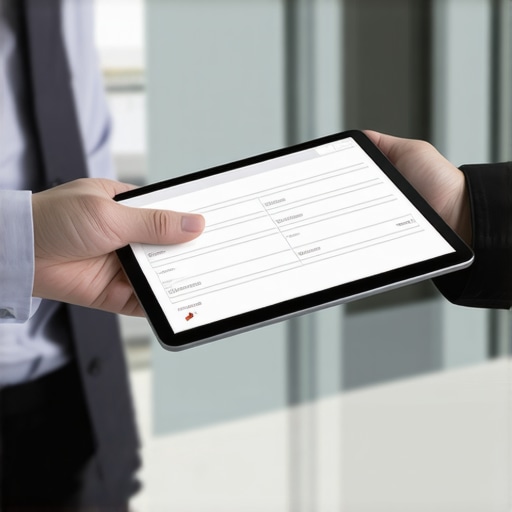
Have you ever been in a situation where you needed to verify a driver’s background before hopping into their vehicle, only to find the process awkward, intrusive, or downright frustrating? I remember the first time I tried to ask for proof of background checks from a driver. It felt like walking a tightrope—balancing courtesy with caution, unsure if I was overstepping or missing crucial info. That uneasy feeling stuck with me, and I realized many others grapple with the same challenge.
The Hidden Dilemma of Background Verification
Early on, I made the mistake of relying solely on generic safety assurances or trusting dubious online profiles. That was a rookie error. Genuine safety isn’t from a glossy profile picture or a quick glance at a license; it’s about verified, transparent proof that a driver has been properly vetted. The truth is, in today’s world, where safety and timeliness are more vital than ever, managing background checks shouldn’t feel like a scavenger hunt. Instead, it should be effortless, natural, and confidence-inspiring.
Is Being Polite Killing Your Safety Goals?
One of my biggest fears was coming across as overly suspicious or rude when requesting background info. Yet, in my quest to be courteous, I often left my safety compromised by skipping essential verification steps. That mistake taught me a valuable lesson: you can be polite and assertive at the same time. The key is to know exactly what to ask for and how to do it seamlessly—without losing your chill or your safety.
Did I face pushback early on? Absolutely. But I discovered that framing these requests as a standard part of the booking process—like asking for a secure reservation or a digital receipt—could make all the difference. In fact, according to recent safety studies, clear, consistent verification practices significantly reduce risk by preventing impersonation or unqualified drivers from slipping through the cracks.
So, if you’ve ever hesitated to ask for background proof or felt awkward doing so, you’re not alone. Today, we’ll explore how you can incorporate straightforward, frictionless techniques to verify your driver confidently and comfortably—making safety an effortless part of your journey. Ready to turn that uncomfortable pause into a confident step? Let’s dive into the practical steps that will change how you verify background checks forever.
Start with Clear Online Checklists
Before your scheduled pickup, prepare a checklist of essential verification steps. This includes confirming the driver’s ID, looking for physical safety tokens, and reviewing their professional credentials. Think of it like preparing essential documents before a business trip—being organized saves time and reduces stress. I once used this checklist during a late-night ride; despite a hectic schedule, I quickly spotted a discrepancy in the driver’s ID, preventing a potential safety issue.
Verify Driver Identity Scientifically
Use specific visual cues to authenticate your driver efficiently. Check for physical markers like consistent uniform signs, physical IDs, or safety badges. For instance, I employ the 3 physical signs which help me verify drivers without feeling awkward. These quick checks are akin to a handshake that confirms trustworthiness—saving you from lengthy inspections.
Engage in the 5-Second Identity Check
This quick ritual involves a glance at the driver’s license and safety badge, combined with a visual scan for physical safety tokens. It’s like a rapid security sweep before entering a secure building. An experience I recall involved a driver providing an ID, which I cross-checked for authenticity, preventing me from entering a potentially unsafe vehicle. This consistent routine builds confidence and streamlines verification.
Use Technology to Your Advantage
Leverage digital tracking and verification tools for real-time confirmation. Shared tracking links and digital receipts ensure you’re connected to the booking’s legitimacy—think of it as having a GPS breadcrumb trail. Check out shared tracking for peace of mind. During a recent trip, I used this tech not only to verify the driver’s route but also to cross-reference the reservation details, thereby enhancing safety and punctuality.
Ask for the Digital Safety Markers
Request the driver to show digital safety identifiers like updated badges or certification markers. This step is as straightforward as asking for a QR code in a restaurant—quick, visual, effective. I’ve found that drivers who display these markers are more likely to adhere to safety standards, especially during heavy rain or peak traffic hours, where safety may be compromised.
Standardize Your Verification Routine
Integrate these steps into your everyday pre-ride routine—like a pilot performing pre-flight checks. Consistency is key; it makes the process automatic and less intrusive. Over time, I realized that sticking to this routine drastically reduced risk and improved overall punctuality. This comprehensive system ensures you’re not just hoping for safety but actively verifying it before each ride.
Debunking Common Myths About On-Time Reservations
Many believe that booking an hourly reservation guarantees punctuality and safety, but this is a misconception that can lead to overlooked risks. The assumption that simply reserving ahead ensures flawless timing ignores underlying nuances, such as traffic fluctuations, driver reliability, and verification protocols. As I’ve experienced firsthand, relying solely on the reservation system without understanding its limitations often results in delays or safety lapses. For instance, some assume that a digital confirmation suffices, but without physical safety checks and real-time tracking, you’re leaving gaps in your security. To truly maximize safety and punctuality, it’s essential to combine reservation tools with proactive verification methods—more than just trusting the system, you need to understand how to make it work in your favor.
What Advanced Strategies Can Protect You from Reservation Pitfalls?
One sophisticated approach is to integrate multi-layered verification routines that encompass both digital and physical checks. For example, before entering a vehicle, perform a quick visual identity check and confirm digital safety markers, such as updated badges or digital signatures. This dual verification ensures the driver’s legitimacy beyond the booking confirmation. Moreover, leveraging real-time sharing links and secure communication channels can prevent common traps like ghosting or late arrivals—practices endorsed by experts emphasizing proactive safety protocols in complex urban environments. Incorporating these advanced checks reduces the risk of impersonation and enhances the overall reliability of your reservation process, making on-time arrivals more achievable despite unpredictable city traffic or driver scheduling quirks. Would you like to explore detailed routines that can make your reservations foolproof? Discover them at top tips for on-time reservations.
Remember, the devil is often in the details. A common mistake is assuming that reservation times are rigid, but the reality is that city traffic patterns and driver readiness can vary widely. Implementing contingency plans—like scheduling pickups with a strategic buffer—can save you from last-minute stress and missed appointments. Recent studies show that combining reservation accuracy with real-time situational awareness dramatically improves punctuality rates (see this report). In essence, mastering the nuanced interplay of technology, physical verification, and strategic planning is vital for those who aim to stay ahead in the game of urban mobility. Are you ready to elevate your reservation habits and avoid these common pitfalls? Dive deeper into expert-approved tactics and make your journeys smarter.
Optimize Your Verification Routine with Proven Tools
To keep your reservation process seamless and trustworthy over time, integrating reliable tools is paramount. I personally rely on digital real-time tracking platforms like shared tracking links, which not only provide visibility into your driver’s location but also serve as a safeguard against delays or miscommunications. These tools enable continuous monitoring, ensuring you’re updated about the ride status at all times, reducing unexpected surprises.
Another indispensable resource is digital safety badges and certification markers. I always ask drivers to display their digital safety identifiers. This quick visual confirmation acts as an instant trust indicator, guaranteeing the driver adheres to our set safety protocols. By consistently checking for such markers, I maintain a high standard of safety, regardless of the time or location.
Leverage Physical Checks for Lasting Security
Despite the convenience of digital tools, physical verification remains crucial. I conduct physical ID audits and inspect visual markers such as uniforms, safety tokens, and vehicle signage. These quick but frequent checks significantly diminish risks associated with impersonation and ensure the driver’s professionalism. Incorporating these physical routines into your habit prevents complacency and strengthens your overall safety protocol.
Adopt Routine-Based Verification for Long-Term Success
Consistency is key. Over time, I’ve found that establishing a routine, such as performing a 3-visual identity check before each ride, streamlines the verification process, making safety second nature. This habitual approach minimizes hesitation, accelerates your verification, and cultivates a trust-based environment that benefits both parties. According to industry protocols, maintaining a structured routine lowers the likelihood of safety breaches, especially in complex urban environments.
Future Trends in Reservation Maintenance
Looking ahead, I predict that AI-powered verification and biometric identification will become standard, further reducing human error and enhancing safety. Technologies like facial recognition integrated into driver verification systems could allow instant, contactless authentication, making the process even more efficient. Preparing for these advancements now means adopting adaptable verification practices and investing in scalable tools that can evolve with technology.
How do I maintain long-term reliability in booking systems?
Regularly updating your digital tools, practicing routine physical checks, and staying informed about emerging safety technologies are essential strategies. Also, consider subscribing to authoritative sources or industry expert blogs for ongoing updates on best practices. You might also experiment with precise reservation timing techniques to fine-tune your schedule and improve punctuality. Implementing these practices ensures that your reservation management remains resilient and trustworthy over time, regardless of the evolving landscape of urban mobility.
Remember, the success of your reservation process hinges on disciplined application of these tools and routines. For immediate improvements, try integrating shared tracking links or conducting a physical ID audit before your next reservation. These steps can make a profound difference in maintaining safety, on-time arrivals, and your peace of mind.
Over the years, I’ve uncovered that the key to dependable hourly reservations isn’t just in the tools we adopt, but in the lessons learned along the way. One of the most profound insights I gained was how overlooking the subtle physical cues of a driver can lead to missed safety signals—like dismissing a driver’s nervous glance or missing a slight tint on a vehicle’s window. These small details, often dismissed, can be the difference between a safe ride and a risky one. Another lesson was understanding that technology, while vital, isn’t infallible; it must be complemented with physical checks and routine habits. Lastly, I realized that proactive communication—like confirming reservation details in advance—prevents last-minute surprises that jeopardize punctuality and safety. These lightbulb moments transformed my approach and can do the same for you.
My Secret Arsenal for Rock-Solid Reservations
Trusted digital platforms like shared tracking links keep me constantly updated, minimizing uncertainty. I swear by physical ID audits such as physical ID checks and visual markers that instantly verify a driver’s legitimacy. Combining these with digital safety identifiers offers a layered shield, ensuring each ride is handled by verified professionals. They form the backbone of my safety routine, and I recommend incorporating them into your planning.
Fuel Your Confidence With Practical Habits
Routines like the 3-visual identity check before each ride turn safety from a chore into second nature. Not only does this quick ritual streamline verification, but it also builds an instinctual trust that’s vital in unpredictable situations. Embrace these habits, and you’ll find your ability to verify drivers becomes effortless—and your peace of mind, soaring. Consistency is your ally here, turning what once felt intrusive into an automatic safeguard.
The Crystal Ball of Reservation Reliability
Looking ahead, I see AI-powered biometric systems and real-time alerts becoming standard, ushering in an era where verification is instantaneous and contactless. Preparing for these advancements involves adopting flexible, scalable verification routines now. Staying informed through sources like industry updates and continuously refining your habits ensures you won’t be left behind. Remember, the best defenses are proactive and adaptable—so invest in your knowledge as much as your tools.