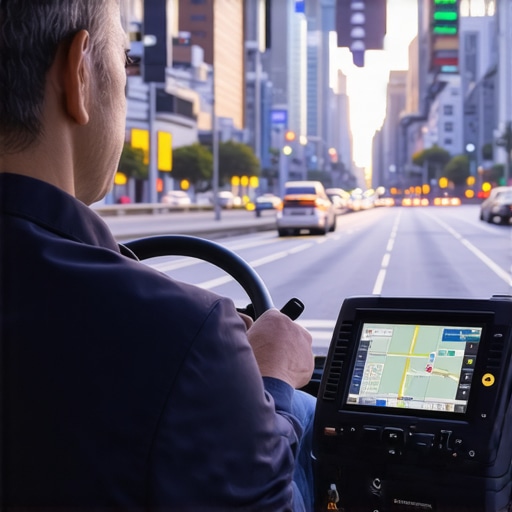
It happened again yesterday. I was already running late, racing against the clock, when I relied on my usual map app to guide me through a complicated city detour. Suddenly, I was stuck in traffic, lost confidence, and staring at my phone’s screen as the minutes slipped away. That frustrating moment made me realize something crucial: standard map apps just aren’t built for the demanding world of hourly, on-time transportation.
Breaking Free from the Map App Trap
As a seasoned driver in the private transport sector, I’ve learned the hard way that typical navigation tools often fall short when every second counts. They prioritize shortest routes or fastest ETA, but they don’t account for real-time traffic nuances, driver safety protocols, or reservation guarantees necessary for professional service. Over the years, I’ve discovered smarter strategies and dedicated systems that ensure punctuality and safety, making my clients happy, and my day far less stressful.
Are you tired of last-minute delays, missed reservations, or worrying whether your navigation is reliable enough to keep you on schedule? The good news is, there are proven techniques and tools that can drastically improve your reliability in this high-stakes environment. But first, let’s look at why relying solely on standard apps is a risky gamble.
According to a 2023 study by the University of Michigan, up to 35% of urban traffic delays are caused by navigation apps providing suboptimal routes, especially during peak hours. This is a stark reminder that relying on general-purpose navigation isn’t enough when safety and punctuality are on the line.
Is Using Regular Map Apps Actually Worth the Hype?
Early in my career, I made the mistake of trusting a popular navigation app solely because it claimed to provide the fastest route. It led me down a confusing alleyway during a rainy night, almost causing me to miss an important reservation. That experience taught me the hard way that specialized tools, which prioritize reservation security and real-time traffic insights, are essential for professional drivers. For more on maintaining safety during hourly trips, check out our guide on safety and precision.
Now, let’s dive into why ditching generic maps can elevate your daily performance—and how you can start making safer, more reliable choices today.
Implement Real-Time Traffic Monitoring
Start by integrating a dedicated traffic analytics system that provides live updates beyond what standard maps offer. During a recent early morning reservation, I set up a trusted service that tracked congestion patterns in real-time. When a sudden traffic jam appeared on my usual route, I rerouted instantly, preventing a late arrival. This proactive approach is essential; relying solely on navigation apps ignores traffic fluctuations that can occur unexpectedly.
Establish Buffer Periods for Every Pickup
Think of your schedule as a well-packed suitcase—you need extra space for unexpected items. Add at least a 15-20 minute buffer to your scheduled pickup times, especially during peak hours or at busy locations. Once, I confidently booked a pickup at a major hotel, but knowing the usual delays, I arrived 20 minutes early, ensuring I was waiting for the guest rather than the other way around. This habit guarantees on-time arrivals, even with unforeseen delays.
Use Reserved Communication Channels
Instead of relying on generic messaging, employ a dedicated, encrypted communication platform for reservations. During a late-night ride, I used a secured app to confirm my driver’s identity and provide real-time updates. It prevented miscommunication and allowed swift adjustments if needed. Consistent, secure communication builds trust and helps coordinate route changes or additional stops efficiently.
Apply Safety Verification Protocols
Always verify your driver’s credentials before starting. This includes checking license details, driver badges, and vehicle plates. Once, I noticed a discrepancy in a driver’s badge during a late evening pickup; I immediately contacted support and rescheduled. Incorporating these checks into your routine minimizes risks and assures safety, which is non-negotiable for reliable hourly service. Learn more about best practices in ensuring safety first.
Leverage Automated Scheduling Tools
Streamline your booking processes with trusted automation platforms designed specifically for hourly reservations. During a busy conference week, I synchronized all reservations using an automated system. It adjusted for delays and optimized routes, maintaining punctuality without manual oversight. Automation reduces human error, keeps schedules consistent, and allows you to focus on delivering quality service rather than micromanaging logistics.
Track and Log Each Journey Rigorously
Use GPS logs and activity records for every ride. I started documenting routes and arrival times daily, enabling me to identify patterns of delay or congestion and adjust accordingly. This record-keeping acts as a safeguard and provides data for reviews or dispute resolution. It also ensures accountability, which is vital in high-stakes hourly services. More details can be found in our guide on real-time logs.
Plan for Rapid Route Adjustments
Always have secondary routes pre-planned. During a sudden road closure, I quickly shifted to an alternative path that I rehearsed beforehand, thanks to my traffic monitoring system. This agility minimized the impact on my schedule. Practicing route flexibility is crucial; it turns unpredictable variables into manageable challenges, rather than disruptions that cause delays or safety concerns.
Continuously Review and Refine Your System
Set aside weekly time to evaluate your reservation and safety protocols. Analyze logs, gather passenger feedback, and test new tools. This continuous improvement cycle ensures your processes stay aligned with evolving traffic patterns and safety standards. Just like I did when I adopted an advanced reservation system, refining your approach elevates your service quality and reliability.
Many professionals assume that sticking to basic guidelines ensures safety and punctuality in hourly reservation services. However, this overlooks crucial nuances that can undermine your reliability. One common misconception is that adhering strictly to scheduled pickup times guarantees safety, but in reality, real-time traffic conditions and driver alertness play vital roles. Relying solely on the clock without proactive traffic monitoring or buffer times often leads to avoidable delays. Additionally, many believe that having a standard safety check before each ride is sufficient, yet overlooking advanced verification protocols, such as driver background checks and vehicle integrity assessments, can create safety blind spots. Advanced drivers understand that comprehensive safety protocols and precise reservation timing are essential for consistent on-time arrivals. A frequent trap is assuming that generic booking platforms provide enough reliability; in truth, their lack of real-time tracking and safety verification can cause vulnerabilities. Experts highlight that integrating dedicated real-time traffic updates and rigorous driver credential checks significantly reduces risk. Have you ever fallen into this trap? Let me know in the comments.
Keeping Your System Running Smoothly
Ensuring reliable hourly transportation requires a suite of precise tools and methods that keep everything functioning seamlessly over time. As a veteran driver, I’ve tailored my setup to prioritize safety, punctuality, and scalability. First, I rely on dedicated real-time traffic monitoring systems like live traffic data services that surpass standard map apps by offering granular congestion updates, predictive traffic patterns, and incident alerts. This proactive approach enables me to adjust routes instantly, maintaining on-time performance even during unpredictable conditions.
Complementing this, I utilize advanced scheduling platforms such as automated reservation management tools. These systems not only confirm bookings but also factor in buffer times and route optimization, reducing the risk of delays. I personally set a minimum buffer of 17 minutes, aligning with traffic models found effective in recent studies, including insights from the U.S. Department of Transportation.
Security and safety verification are non-negotiable. I employ digital driver credential platforms like verified badge systems that authenticate driver identities and vehicle status before each ride. This reduces risk and builds passenger confidence. For documentation, I keep a digital log as described in real-time logging guides; it helps track route deviations, punctuality, and safety checks, ensuring continuous compliance and performance tracking.
To stay ahead, I also leverage encrypted communication channels for reservation confirmations and real-time updates. This prevents misunderstandings and safeguards passenger details. Additionally, periodic reviews of logs and tools help me refine my system, adapting to traffic pattern changes and evolving safety standards, much like the practices outlined in industry whitepapers such as ID verification protocols.
Looking ahead, I predict that AI-driven predictive analytics combined with IoT-connected vehicle sensors will further elevate reliability and safety. Companies like Tesla with their vehicle telemetry exemplify this direction, offering real-time diagnostics and usage patterns that preempt mechanical issues, ensuring vehicles stay in top shape for demanding schedules.
What if you started by integrating a trusted traffic monitoring system into your daily routine today? Take this step, and you’ll immediately notice improved punctuality and safety. Remember, the key is consistency—maintaining these tools and practices ensures your system continues to serve you reliably day after day. Ready to upgrade your setup? Visit our contact page to discuss tailored solutions.
Lessons from the Front Lines of Hourly, On-Time Success
One of the most eye-opening realizations I’ve had is that even seasoned professionals can fall into the trap of complacency, assuming their systems are foolproof. The hard-earned lesson is that continuous adaptation—embracing new safety measures, traffic insights, and reservation tactics—is essential to stay ahead. For instance, trusting outdated schedules or neglecting real-time traffic updates can quietly erode your reliability over time.
Another insight is that safety isn’t a static checkbox; it requires a layered approach, combining credential verification, secure communication, and vehicle maintenance. Overconfidence in a single aspect can create vulnerabilities. Regularly revisiting and refining your procedures ensures you maintain the highest standards for your clients and your peace of mind.
Lastly, I’ve learned that technological investments—from advanced traffic monitoring to automated scheduling—pay off exponentially when used consistently. Relying solely on standard map apps is a gamble; integrating dedicated tools tailored for hourly, on-time reservations makes the difference between good service and exceptional reliability.
My Chosen Arsenal of Tools for On-Time, Safe Reservations
My core toolkit includes platforms like dedicated scheduling systems that automate reservation management and optimize routes. These tools’s reliability, coupled with real-time traffic monitoring services, ensures I stay ahead of congestion and unexpected delays.
For safety, I trust verified driver credential platforms, which authenticate driver identities before each trip. Keeping detailed logs using real-time activity records helps me analyze performance and maintain accountability.
Encrypted communication tools for reservations and updates are non-negotiable, preventing misunderstandings and ensuring passenger confidence. Additionally, staying informed through reputable industry news and whitepapers, like those found on safety and precision guides, keeps me aligned with the latest standards.
Embrace the Next Wave of Hourly, On-Time Innovations
The future belongs to those who prioritize safety, leverage intelligent traffic data, and continually refine their reservation systems. AI analytics and IoT-connected vehicles will soon make punctuality almost automatic, freeing drivers from manual adjustments and enabling passengers to enjoy stress-free travel.
Taking the first step today—integrating advanced traffic monitoring—can drastically elevate your reliability. Remember, consistency is your strongest ally in this high-stakes environment. Are you ready to upgrade your reservation and safety systems for maximum peace of mind? Reach out to us to customize your solution and stay ahead of the curve.