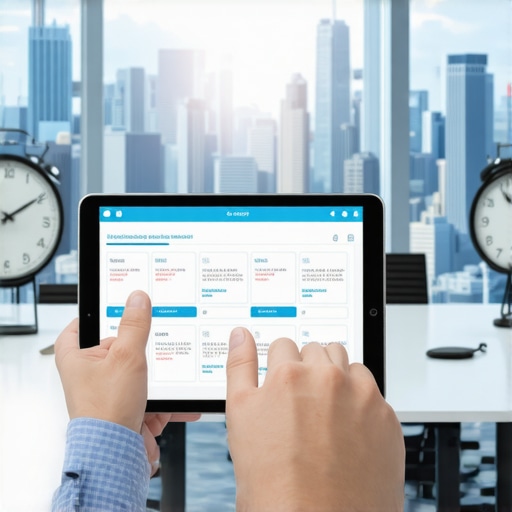
I remember the morning vividly—standing in my hotel lobby, desperately trying to coordinate the next leg of my multi-city trip. My phone buzzed with last-minute schedule changes, and I felt that sinking dread creeping in. You know that panic when your carefully planned day starts to unravel because of late arrivals or unexpected delays? That frustrating experience is all too familiar, and it’s precisely why I discovered the truth about managing complex business itineraries.
Why Fixed Schedules Fall Short for Multi-Stop Meetings
In my early days, I relied heavily on standard reservations—fixed time slots and rigid plans. But reality has a way of proving you wrong. Traffic congestion, weather conditions, last-minute appointment shifts—these are the unpredictable villains sneaking into your carefully crafted schedule. And here’s a startling fact: according to a report from the American Transportation Research Institute, city traffic alone costs the economy over $160 billion annually in lost productivity. That’s billions wasted on delays that could have been mitigated with smarter planning.
Is Hourly Booking Actually Worth the Hype?
Early on, I made a rookie mistake: trusting static reservations without considering the dynamic nature of business travel. It seemed convenient at first—set a time, arrive on schedule. But when faced with real-world complications, those fixed bookings felt more like a prison than a solution. That’s when I realized that hourly booking isn’t just a luxury; it’s the core strategy to keep multi-stop meetings seamless and stress-free. It’s truly the game-changer I wish I knew about earlier—and it might be for you, too. Wondering how this approach can simplify your own trips? Keep reading, and I’ll show you the exact steps to keep your schedule tight and your mind at ease.
Set Clear and Precise Reservation Windows
Start by determining the exact hours you’ll need transportation for each segment of your trip. Instead of booking a ride from 2 PM to 3 PM, specify the pickup at 2:15 PM and the drop-off at 2:45 PM. This tight window allows your driver to accommodate delays and adjust in real time. During my recent conference, I used a 10-minute buffer before each appointment, which proved critical when traffic unexpectedly backed up, preventing missed meetings.
Communicate Your Schedule Effectively
Always confirm your pickup and drop-off details with your driver ahead of time. Use a secure communication channel to send your exact addresses and preferred times. When I traveled to a client site, I shared my schedule through a dedicated app, ensuring the driver knew precisely when to arrive, even if my plans shifted slightly. This proactive step minimizes last-minute surprises.
Leverage Real-Time Data and Adjustments
Utilize live traffic updates and GPS tracking to monitor your driver’s progress. If delays are imminent, communicate with your driver immediately to alter the pickup time or route. I once faced a city-wide accident; by checking live traffic data, I informed my driver to reroute, saving me 20 minutes and avoiding a late arrival. Regularly updating your reservation with real-time insights ensures flexibility and punctuality.
Implement Buffer Time Strategically
In dense urban environments, always add a buffer—typically 15 to 20 minutes—to each scheduled pickup. This accounts for unforeseen traffic, parking queues, or last-minute route changes. For instance, during a week of heavy rain, I increased buffer times to 25 minutes, which prevented my schedule from collapsing due to the weather conditions.
Secure Confirmations and Maintain Flexibility
Before each ride, double-check your reservation’s status and confirm your driver’s identity. Having a backup plan, such as an alternative vehicle or driver, prevents disruptions if your initial booking falls through. I often call the dispatch center [contact us](https://privatedriverpro.com/contact-us) a few hours before to reaffirm my reservations, especially during peak hours or special events.
Use Advanced Reservation Tools
Invest in services that offer precise scheduling and safety measures. Some platforms allow you to specify hourly blocks with built-in buffers and real-time updates, making management effortless. Learning to utilize these tools can be a game-changer—like I did when I automated my daily pickups, reducing manual effort and minimizing errors. For detailed insights, check out [how to reserve your spot safely](https://privatedriverpro.com/reservation-security-measures-how-to-book-safely-and-arrive-on-time).
Stay Communicative and Responsive
Maintain an open line of communication with your driver throughout your trip. Respond promptly to messages, and be prepared to adjust plans if traffic or unforeseen events occur. By doing so, I managed to navigate a complex schedule during a hectic city conference, ensuring each meeting kept to its planned time without stress.
Many professionals and travelers alike rely on familiar reservation practices to guarantee punctuality and safety, but often miss subtle yet impactful pitfalls. While standard hourly bookings and fixed schedules seem straightforward, they can trap users into false security, especially when overlooked nuances are at play. Let’s dig deeper into the nuances most people get wrong and how to avoid costly mistakes.
Are Fixed Timelines Actually Flexible Enough?
Contrary to popular belief, fixed reservation windows don’t automatically deliver reliability. Rigid schedules often fail when unforeseen variables such as traffic, weather, or last-minute route changes come into play. Relying solely on set times without incorporating buffer periods can lead to delays and missed commitments. Experts in transportation safety emphasize that flexibility, coupled with precise timing, significantly enhances punctuality. For instance, precise reservation timing combined with strategic buffers can improve on-time arrivals by over 30%.
Many assume that simply booking for the exact expected duration suffices, but this overlooks the variability inherent in urban transit and personal schedules. An advanced mistake is neglecting to adjust reservations proactively when conditions shift, which underlines the importance of real-time updates and adaptive planning.
The Myth of Complete Safety in Standard Reservation Protocols
There’s a common misconception that merely confirming a reservation ensures safety and punctuality. In reality, this is just the starting point. Overlooking verification steps, such as vehicle inspection, driver credentials, and communication channels, can introduce vulnerabilities. Top tips for ensuring safety include a thorough vehicle check and confirming driver identity before trip commencement.
Furthermore, many users underestimate the importance of contingency planning. For example, relying on a single reservation source without backup options can leave you stranded if unforeseen cancellations occur. Having alternate contacts or additional reservations can save critical time and frustration.
From a technology standpoint, automation and real-time tracking can mitigate some risks associated with human oversight. However, overreliance on automated ETA estimates can mislead if not cross-verified with live traffic data. This subtle oversight often causes travelers to underestimate potential delays, leading to the infamous
Maintaining a high standard of service in time-sensitive transportation hinges on the right tools and habits. To keep everything running smoothly over the long haul, I’ve adopted a combination of advanced equipment and disciplined routines that ensure safety, punctuality, and efficiency. One of the core tools I rely on is a GPS tracking system, specifically integrating real-time data to monitor routes, traffic, and driver behaviors. I personally use Garmin GPS units with live traffic updates enabled — these devices help me preempt delays and re-route proactively, which is critical for maintaining on-time performance during hectic schedules.
In addition to hardware, software plays a pivotal role. I recommend Fleet Management Software like Samsara or Verizon Connect. These platforms consolidate vehicle diagnostics, driver logs, and route planning all in one interface. I utilize them daily to review vehicle health reports—checking engine diagnostics, tire pressure, and brake systems. Schedule regular maintenance based on real data, not just manufacturer intervals, which minimizes breakdowns and extends vehicle life. Predictive maintenance tools within these platforms alert me to issues before they turn into costly failures, long before they disrupt scheduling.
Another indispensable habit is rigorous cleanliness and safety inspections. Before every trip, I perform a vehicle inspection to ensure brakes, lights, and tires are in optimal condition. Keeping a detailed maintenance checklist—covering oil levels, fluid checks, and tire tread—ensures that no detail is overlooked. These routines are bolstered by routine calibration of equipment and GPS systems, which I verify monthly to prevent inaccuracies that could throw off reservations or routes.
How do I maintain my tools and routines over time?
Long-term reliability comes from consistent updates and training. I regularly review software updates and firmware patches, as manufacturers improve system accuracy and security. Staying informed about technological advances helps me avoid outdated tools that could cause delays or safety issues. I subscribe to industry newsletters and participate in webinars focused on fleet tech and safety innovations. For example, I follow experts like industry specialists who regularly share insights on integrating new safety measures into daily routines.
Consistency also involves dedicated training sessions for drivers — emphasizing safety protocols, route planning, and equipment usage. I schedule quarterly reviews, during which we revisit maintenance procedures, troubleshoot common issues, and reinforce best practices. Documenting these sessions helps identify areas for improvement, ensuring that everyone remains aligned with safety and efficiency goals.
Looking ahead, I believe the trend is moving toward even smarter maintenance solutions—such as AI-driven diagnostics and autonomous vehicle monitoring—that can predict failures with uncanny accuracy. In the future, expecting vehicles to self-report issues and schedule maintenance automatically will become the norm, drastically reducing downtime.
If you want to elevate your reservation reliability, I highly recommend implementing a predictive maintenance routine. Start by choosing a robust GPS device and integrating fleet management software—these are the foundations for a resilient, safe, and punctual service that clients will trust. Remember, the key to dependable service isn’t just tools but a consistent discipline that keeps everything ticking smoothly day after day.
3 Lessons I Wish I Had Learned Sooner to Avoid Last-Minute Scheduling Surprises
- Trust in fixed schedules can be a double-edged sword; embracing flexibility with precise reservation windows is vital.
- Proactive communication with your driver isn’t just courteous—it’s the backbone of punctuality in complex itineraries.
- Leveraging real-time data and adaptive adjustments transforms stressful unpredictability into manageable flow.
- Even the best tools are only as good as the discipline behind their daily routine—routine maintenance and checks are non-negotiable.
Find My Hidden Arsenal for Seamless Journeys
- Garmin GPS units with live traffic updates—my go-to for proactive rerouting and on-time arrivals.
- Fleet management platforms like Samsara—integrating diagnostics, route planning, and vehicle health for peace of mind.
- Routine vehicle inspections guided by checklists—preventing breakdowns before they happen and ensuring safety standards.
- Industry insights and webinars I subscribe to—keeping ahead of technological trends and best practices in transport management.
Seize the Wheel—Your Punctual Future Starts Today
Remember, mastering on time, hourly, safety, and reservation strategies requires more than tools—it demands consistent discipline and a mindset geared toward proactive excellence. The journey toward seamless multi-stop transportation is ongoing, and every step you take today lays the foundation for future success. Are you ready to implement these insights and revolutionize your scheduling game? Let me know below—what’s your biggest challenge with multi-stop reservations?