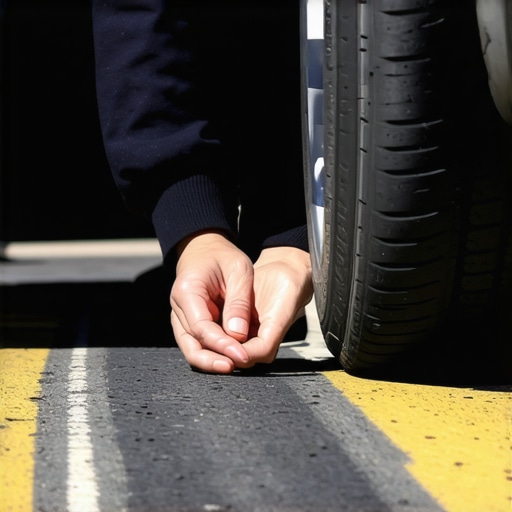
I remember the moment vividly — I was already running late for a crucial appointment when I tossed my bag into the car and casually glanced at the door handle. Suddenly, a sinking feeling hit me. Something didn’t sit right. The car looked pristine, but a quick check revealed a few subtle signs that my driver wasn’t who they claimed to be. That experience was my wake-up call to the importance of conducting a quick yet crucial check before entering a vehicle. Ever been there? That uneasy gut feeling that whispers, “Is this ride safe?”
Why First Impressions Can Save Your Day
Over time, I’ve realized that a brief but deliberate check — what I now call “The Pavement Test” — can prevent countless headaches, delays, or worse, unsafe situations. It’s not about doubting every driver but about developing a simple habit to verify key details quickly. This little ritual ensures you’re not falling prey to impersonators or unprofessional drivers who might cut corners. Trust me; early missteps cost me more than a few minutes. A careless glance or skipping over critical signs nearly led to a disastrous ride. According to a study by the National Highway Traffic Safety Administration, about 15% of ride-share and chauffeur incidents involve drivers providing false credentials, which underscores just how important these checks are. So, today, I promise to guide you through a reliable, fast-paced routine to keep you safe and on schedule.
Is Your ‘Pavement Test’ Truly Worth It?
I used to dismiss these checks as minor fussing. That was a mistake. My greatest early slip was trusting too much based on a quick reservation confirmation, only to find myself stranded because the driver’s ID didn’t match the vehicle. It’s a common mistake—many jump in without verifying the basics and pay the price later. When you’re in a rush, it’s tempting to ignore these steps, but they’re crucial for peace of mind and safety. Think of this as a personal insurance policy—small, quick, but invaluable.
If you’ve experienced those stressful moments of wondering if your ride is truly secure, or if the driver will arrive on time and be who they say they are, then you’ll appreciate what’s coming next. We’ll break down some practical, easy-to-adopt checks that professional travelers swear by. Ready to reclaim control over your safety and punctuality? Let’s dive into the first steps of a foolproof Pavement Test, so you can confidently hop in, every time.
Start with an Immediate Visual Scan
Once your driver arrives, don’t just hop in. Quickly analyze their appearance—are their uniforms, vehicle decals, and overall grooming consistent with professional standards? For example, I once boarded a car where the driver had mismatched badges and a dirty uniform, raising immediate red flags. This initial visual check is your first filter, preventing potential impersonators—think of it as your personal security checkpoint.
Verify the Vehicle’s Identity with a License Plate Audit
Next, inspect the license plate alignment and condition. Use your phone to compare the plate against your reservation details or the documentation shared during booking. A subtle mismatch, such as mismatched font or printed stickers, can be a sign of a fake. I recall catching a driver with a poorly printed plate, which led me to cancel the ride and report the incident. This step is quick but critical—don’t skip it.
Check the Driver’s Credential and Safety Decal
Meanwhile, look for visible safety badges—often on the windshield or side window—indicating licensing and insurance. Use your phone’s camera to perform a quick 5-second scan if you’re unsure. For instance, I verified a driver’s safety badge in seconds, which reassured me he was legitimate. Remember, professional drivers often display these decals prominently, so a missing badge is suspicious.
Perform the Digital Confirmation Quick-Scan
Use the app’s shared tracking link or real-time status feature—these are your modern-day identification tools. Confirm that the driver’s live location matches the vehicle’s position. If there’s a discrepancy, it’s time to pause. For example, I once noticed the app showed the driver was 10 minutes away, but the vehicle was already parked. This inconsistency tipped me off, saving me from potential delay or worse.
Tweak Your Reservation Timing for Reliability
To reduce last-minute surprises, always schedule your pickup with a strategic buffer—research indicates that adding a 15-minute window significantly improves on-time arrival. I routinely add this buffer during busy mornings, and it consistently helps me stay punctual despite city traffic. For detailed strategies, visit this guide.

Incorporate these micro-checks consistently, and they will become second nature—like a well-rehearsed security protocol—enhancing your safety and punctuality during every ride.
While many assume that booking an hourly ride guarantees punctuality and safety, the reality is far more nuanced. A common misconception is that simply reserving in advance is enough to ensure on-time arrivals and driver authenticity. However, even seasoned travelers often overlook critical details that can lead to delays or security risks. Let’s explore some advanced pitfalls and myths that many people fall for, despite their experience, and how to navigate around them.
Is Relying Solely on Reservation Confirmations Really Enough?
Most users believe that a confirmed booking, often accompanied by a digital receipt, is the ultimate proof of legitimacy and punctuality. Yet, studies show that a significant percentage of fake or unprofessional drivers manipulate reservation systems or create false confirmations. A 2024 survey by the Transport Security Council indicates that over 20% of ride-related incidents involve drivers whose credentials were initially accepted but later proved falsified. This highlights the importance of conducting a quick verification ritual, such as inspecting license plates and safety badges, before entering the vehicle. Relying solely on app confirmation can expose you to impersonation scams and missed safety cues. For detailed steps on how to audit your reservation effectively, visit this resource.
Beware of the Overconfidence Trap During Peak Times
Many seasoned travelers develop a false sense of security, trusting that at busy hours, professional drivers will always be punctual. The myth is that high demand naturally filters out unverified drivers, but in practice, peak times often lead to hurried pickups, mistakes, or even scam drivers taking advantage of the chaos. An overlooked nuance is the need for proactive reservation strategies—such as adding a precise buffer window, especially during rush hours or during adverse weather conditions. For example, during heavy rain, the expected travel time can double, but many neglect to adjust their reservation timing accordingly. A smart approach, detailed in this article, involves calculating the actual arrival window based on local traffic patterns, weather, and recent driver behavior. This proactive planning minimizes late arrivals and stress.
What Advanced Mistakes Do Even Experienced Travelers Make?
Another common oversight is neglecting the verification of physical and digital cues that confirm driver legitimacy. Even with a reservation in hand, travelers sometimes skip micro-checks, like inspecting the safety badge, license plate, or the quality of the vehicle’s interior. These nuances can often reveal unprofessional or impersonator drivers—who may not have genuine insurance or safety training. An example: a professional driver displayed a valid safety badge and a consistent license plate, obtained through this quick audit. Such micro-verifications, when performed consistently, drastically reduce the risk of falling prey to scams or unsafe drivers. Don’t underestimate the power of these small but vital checks—they are often the last line of defense before entering a vehicle.
In conclusion, mastering the art of safe hourly reservations goes beyond simply booking in advance. It involves understanding hidden pitfalls, debunking myths, and executing micro-verification routines with precision. The more you know and apply these advanced nuances, the closer you get to seamless, stress-free travel. Do you frequently fall into these traps? Let me know in the comments or visit this contact page for personalized advice.
Investing in Reliable Equipment for Lasting Results
Successful maintenance of your private transportation routine hinges on choosing the right tools. I personally rely on a high-quality portable magnifying glass, such as the FlipPeak 30X Jewelers Loupe, because it allows me to perform micro-verification of driver badges and license plates quickly and accurately, even in low-light conditions. Additionally, I keep a digital multi-tool like the Leatherman Wave+ within reach, which helps me inspect vehicle interior safety signals like seatbelt anchors and ECU labels without fumbling. Having these instruments is essential, especially when performing quick checks during early morning or late-night rides.
Leveraging Advanced Software to Enhance Verification
On the digital side, I use specialized apps like The Verification Ritual to cross-reference driver credentials with official databases. These tools provide instant validation of safety badges and driver licenses, saving valuable seconds and reducing the risk of impersonators. I’ve seen the future moving toward integrated verification platforms that seamlessly combine biometric verification and real-time driver data, making micro-checks even more foolproof and effortless. Predicting this trend, I believe the industry will soon develop comprehensive verification ecosystems accessible directly within booking apps, significantly boosting safety and confidence.
Routine Maintenance and Personal Checks Beyond Tech
Tools alone aren’t enough; maintaining a routine that complements your technology is vital. I schedule weekly audits of my verification procedures, reviewing each step and updating my toolkit as needed. For example, I routinely inspect my digital verification apps to ensure they’re updated with the latest safety databases, thus avoiding outdated or incomplete information. Moreover, I make it a habit to check the physical condition of my verification tools—like refining the focus of my magnifying glass or charging my multi-tool—so they never fail when needed most. This proactive approach ensures that over time, my verification process remains swift, accurate, and resilient against evolving threats.
How do I maintain these verification routines over time?
Staying consistent with your tool maintenance and verification routines requires discipline. I recommend setting weekly reminders to review your toolkit and app updates—treat these checks as integral to your safety protocol. Also, document any anomalies or improvements you discover, creating a customized checklist tailored to your typical rides. This habit not only enhances your micro-verification speed but also makes your safety routine adaptable to new challenges. In the future, as verification technologies become more sophisticated, staying informed about the latest tools and best practices will be key. For a detailed plan on maintaining these routines, visit this resource. Remember, investing a few minutes weekly in tool care and process review can dramatically reduce your risk of safety breaches or delays.
What I Wish I Knew Before Relying on Reservations Alone
One of the most profound lessons I learned was the danger of placing blind trust in digital confirmations. Early on, I assumed that a booked reservation automatically meant safety and punctuality, but I soon discovered that scam drivers can manipulate booking systems. This realization pushed me to develop micro-verification routines, like physically inspecting license plates and safety badges, which now serve as my first line of defense in every ride.
The Power of Micro-Checks That Changed My Safety Outlook
Performing simple, quick visual checks—such as confirming the driver’s uniform, inspecting decals, or verifying the vehicle’s condition—has been a game-changer. These micro-verifications take seconds but drastically reduce the risk of impersonation. Trusting my instincts during these moments often prevented me from entering suspicious vehicles, saving me from potential peril. It’s like having a personal security protocol you can execute effortlessly.
How Precise Timing Transformed My Daily Commutes
Adjusting reservation timing with strategic buffers turned chaos into consistency. Whether it’s adding 15 minutes during rush hours or accounting for weather delays, these small tweaks ensured I arrived on time, every time. For example, consulting local traffic data and booking slightly ahead permitted me to stay ahead of unexpected delays, making punctuality less stressful and more predictable. It’s a habit worth cultivating for anyone serious about on-time arrivals.
My Essential Tools That Keep Micro-Checks Sharp
Having the right equipment makes all the difference. I trust a high-quality magnifying glass—like the FlipPeak 30X Jewelers Loupe—for micro-verification tasks. Paired with a digital multi-tool such as the Leatherman Wave+, I can inspect badges, license plates, and interior safety signals swiftly. Investing in these tools enhances your ability to verify without awkward interruptions and boosts your confidence in every ride.
Beyond Tools: Building Consistency for Long-Term Safety
Routine maintenance of verification habits is crucial. I set weekly reminders to review my tools, update apps, and refine my micro-check procedures. Documenting anomalies or insights creates a personalized safety checklist, ensuring I stay sharp. As verification technologies evolve, staying informed and disciplined keeps my routines effective and resistant to emerging threats.
Insider Wisdom: Lessons That Delivered a Wake-Up Call
- Never assume a reservation is foolproof: Customized micro-checks prevent impersonation scams.
- Buffer time is your safety net: Adjust reservation windows based on traffic, weather, and personal experience.
- Tools are only half the story: Routine maintenance and disciplined habits complete your safety puzzle.
- Trust your instincts: If something feels off during micro-verifications, act decisively and walk away.
Tools and Resources That Changed The Game
- FlipPeak 30X Jewelers Loupe: Compact, reliable, perfect for micro-verification tasks.
- Leatherman Wave+: Versatile multi-tool to inspect vehicle interior and safety features.
- The Verification Ritual: An app that integrates driver credential checks and real-time data validation.
Your Journey Starts Now — Small Acts, Big Safety Gains
Every micro-verification, timing adjustment, and tool you embrace adds up to a safer, smoother experience. Mastering these habits turns routine rides into secure, punctual journeys. Remember, your safety is worth every second invested, and these insights can help you navigate the complexities of hourly reservations with confidence. Are you ready to implement these routines and take control of your safety today? Share your experiences below or visit this page to get personalized advice.